
Blog
Chrysanthemum Crystal Jelly With Goji Berries Inside
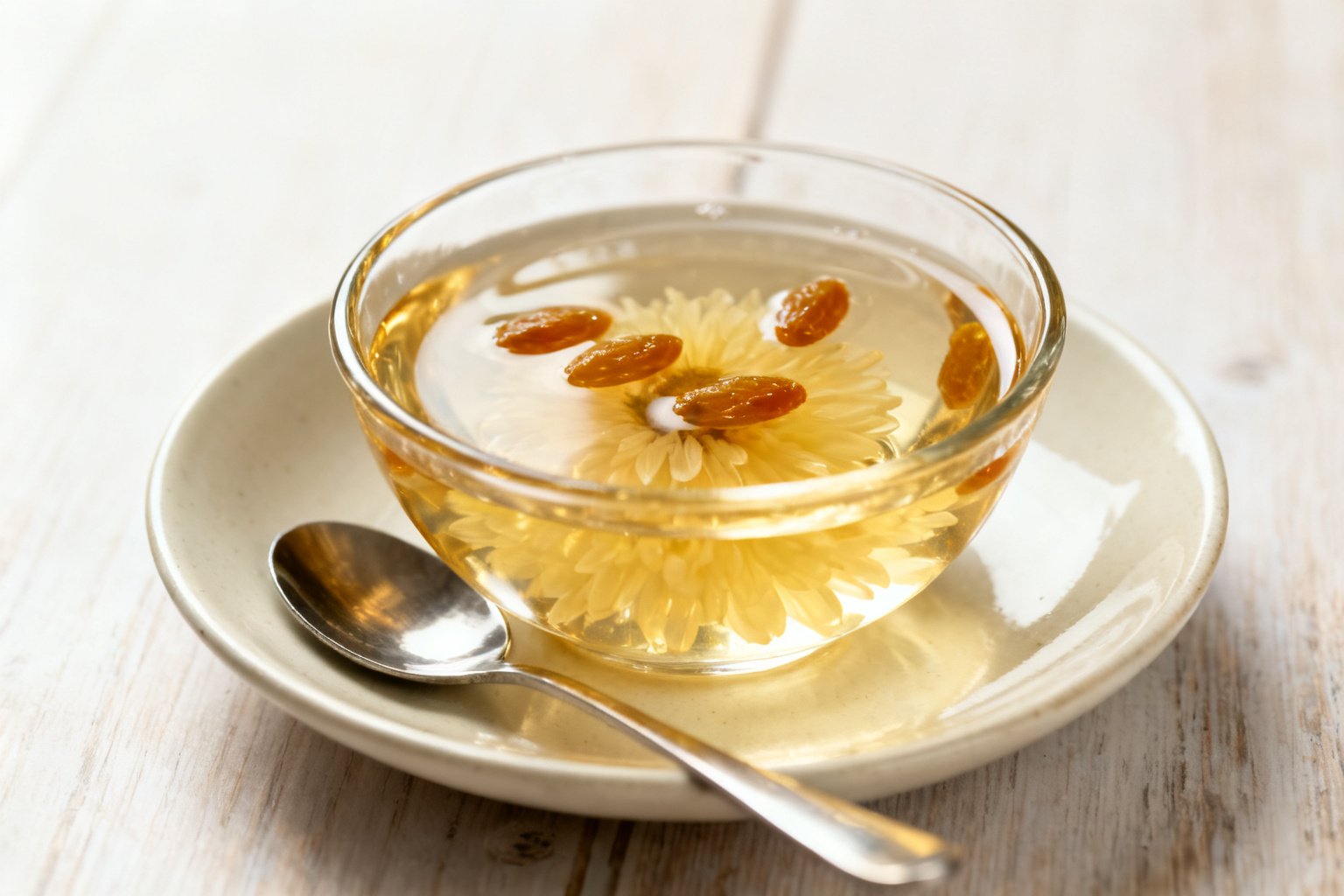
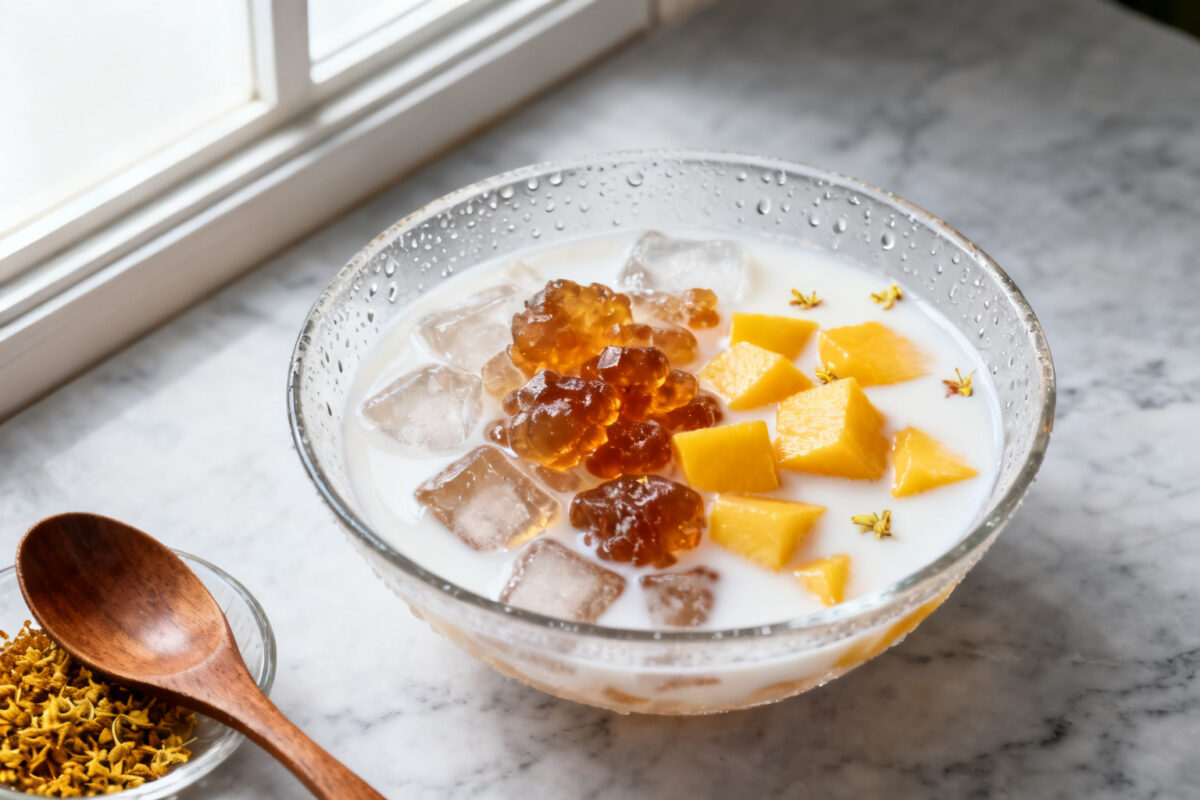
A chrysanthemum jelly is eaten with the eyes before it reaches the mouth. The set is pale and translucent, and the goji berries hang inside it at different depths, some near the surface and some sunk toward the base. You can see the whole arrangement through the side of the cup, which is unusual for a dessert and is the first thing worth understanding about this one.
A crystal jelly dessert is built on that transparency. The base is a clear, lightly sweetened set, and everything that gives it character has to be visible: the colour of the infusion, the shape of the fruit, the clean line where the jelly meets the cup. There is no cream, no crumb, no sauce to hide behind. An opaque dessert can be a little rough and nobody notices. A clear one cannot.
That is the frame for Chrysanthemum Crystal Jelly, a floral jelly with goji berries set inside it and nothing else floating around. The flower gives the set its pale gold colour and its scent. The berries give it the only interruptions in an otherwise smooth surface. Both are visible, and both are the point.
Clarity also sets the terms of the flavour. With no fat or starch coating the tongue, the flower has to be clean and the sweetness has to stay low. Too much sugar in a clear jelly turns the cup syrupy, and the floral note disappears behind it. The style only works when the set is restrained.
In This Article
You See the Berries Before You Taste Anything
Chrysanthemum does not arrive in this jelly as a syrup or a flavouring. It comes in as an infusion, the way the flower reaches a cup of tea: dried blossoms steeped until the liquid takes on their colour and scent. That is a gentle method, and it produces a gentle result. Chrysanthemum flowers give up their character slowly, so what you taste is rounded rather than sharp.
If you have had chrysanthemum tea, you already know the shape of it. The aroma is soft and a little hay-like, closer to dried flowers in a warm room than to a garden in bloom. On the tongue it is light and faintly sweet, and then, a second or two later, a mild bitterness shows up at the back of the mouth and stays. It is not the bitterness of tonic. It is closer to the edge at the end of a good green tea.
In a chrysanthemum jelly that bitterness has a job. It arrives after the sweetness and clears it away, so the finish is dry rather than sticky. Without it, the cup would be sugar and cold, and most people would stop after three spoonfuls. With it, the flavour reopens each time you go back.
The restraint is also why the flower reads clearly in a chrysanthemum crystal jelly at all. A clear set has no dairy to round off rough edges and no fat to carry a heavy aroma. Whatever goes in is what you get. Infusion is the right technique for that, and over-flavouring is the wrong one. The scent should come up from the cup, not sit in the air around it.
The Goji Berries Are There for Acid and Chew, Not Decoration
The goji berries are the other half of the design, and the part people remember. Eaten alone, they are tart and a little sweet, with a faint herbal note underneath and a chewy skin. In a goji berry jelly they do something more useful than decorating. They balance the flower.
The acidity is the main contribution. Chrysanthemum is soft and slightly bitter but not bright, and a jelly made only with the flower can taste flat in the middle of the mouth. The berries bring a small sharp lift that sits in front of the bitterness and stops the two from blending into one vague floral sweetness.
Then there is the chew. Everything else in the cup is smooth and cold, and the berries are the only thing your teeth work on. Each one gives a little resistance, then releases its juice into the set around it. That contrast is why the cup does not feel monotonous even though it contains so little.
Setting the berries inside rather than laying them on top matters for the same reason. A berry inside is surrounded by moisture, so it softens and its tartness spreads slightly into the jelly around it. A berry on the surface just sits there and slides off the spoon. Inside, every spoonful has a chance of carrying one up with it.
This Is a Small Dessert, and Size Changes How It Tastes
Once the berries are set inside the jelly, the next question is how much of it to put in front of one person. Size matters more here than it does with a cake. The flavours are quiet and the texture is uniform, so the pleasure is concentrated in the first five or six spoonfuls. A large bowl of the same jelly becomes something to get through rather than something to enjoy.
A thin-edged spoon is the right tool. If the set is soft, a thin spoon cuts a clean edge and lifts a piece with the surface intact, while a heavy spoon crushes the jelly against the side of the cup. Eating straight from the container with a small spoon also slows you down, which suits a dessert that ends on a bitter note.
Toppings are not required. A mint leaf or two extra berries on top will not hurt it, but cream, condensed milk or a scoop of ice cream will. Those add fat, and fat coats the tongue and buries a floral note this light. A clear jelly is at its best when the surface is left alone.
That restraint is not austerity. It is the reason the cup tastes of chrysanthemum and goji rather than of sweetened cold. Three elements are enough when you can pick out each of them separately, and a dessert that keeps its parts distinct is more interesting than one that blends them into a single soft flavour.
Warmth Ruins This Jelly Faster Than Time Does
Serving size is not the only thing that decides how this cup reads. Temperature is part of the structure too. Cold firms the set, holds the berries in place and slows the release of aroma, so the first spoonful is floral and the finish arrives a beat later. Warmth does the opposite on all three counts.
Leave a clear jelly out on a counter and you can watch the change. The edges soften first and start to slump, the cut surface loses its shine, and the whole thing begins to taste sweeter than it did when it was cold. The flower, meanwhile, flattens. Aroma compounds are volatile, and once the cup is warm they leave quickly and do not come back.
In practice, that means keeping the cup cold until the moment you open it, and not leaving it on a desk or in a warm car while you finish something else. The package carries the storage details and the time the jelly keeps, and those are worth reading once instead of guessing. If it has warmed up, put it back in the cold before you eat it; texture recovers, aroma mostly does not.
Cold also changes how sweet the cup reads. Chilling mutes our perception of sugar, which is why a jelly served straight from the refrigerator tastes less sweet than the same jelly at room temperature. For a dessert this light, that is exactly the effect you want: the flower and the tart berries come forward, and the sugar steps back.
Where a Light, Bitter Bowl Actually Belongs in the Day
Cold, small and quietly bitter, it fits in places a slice of cake would not. The most obvious is the end of a rich meal, when something sweet and heavy is the last thing anyone wants. The bitterness does the work there. It cuts through fat on the palate and leaves the mouth clean rather than coated.
The table below is less about rules than about what to put beside the cup, since a pairing can change how the flower reads.
| The Moment | What to Pair With It | Why It Works |
|---|---|---|
| After a rich, oily dinner | Nothing at all, or plain hot tea | The bitterness strips fat from the palate, and extra sweetness would undo that. |
| A hot afternoon | A glass of cold water first | Rinsing the mouth lets the floral note land on the first spoon rather than the third. |
| Weekend afternoon tea | A light oolong, brewed weak | A strong or heavily scented tea competes with chrysanthemum; a weak one stays out of its way. |
| The end of a home Chinese meal | Sliced fresh fruit | Fruit brings a different acid and a bite the smooth set does not have. |
| Late evening, when nothing heavy will do | One small bowl, eaten slowly | The portion ends the day without leaving weight on the palate. |
Notice how few of these pairings involve other desserts. A chrysanthemum goji dessert works as a contrast to something, not stacked on top of more sweetness. If you are serving it to someone who has never had a floral jelly, let them taste it plain first. The bitterness is easier to appreciate before anyone explains it.
That is also the argument for keeping a cup or two in the refrigerator for ordinary evenings rather than saving it for an occasion. It is a light, ready to eat dessert that asks for no assembly and no topping, and it ends a weekday meal better than most things sold as dessert. Open it, keep it cold, and eat it with a small spoon.
More desserts built on this kind of lightness, floral, fruit-set and quietly bitter, sit in our wellness Chinese desserts collection.
One Thing to Remember
The cup is built on restraint: a clear set, a quiet flower and a few tart berries. Served cold and small, the bitterness arrives after the sweetness and clears the palate. Warm it, or cover it with cream, and the flower disappears.
Frequently Asked Questions
What does chrysanthemum crystal jelly taste like?
Light and floral first, with a mild bitterness at the back of the mouth and a tart lift from the goji berries. The finish is dry rather than sugary, and the cup stays cool and clean throughout.
Should it be eaten cold?
Yes. Cold keeps the set firm, holds the berries in place and keeps the flower from flattening. Let it warm up and the texture softens while the aroma fades.
Are the goji berries inside the jelly or on top?
Inside. They are set into the jelly rather than sprinkled over it, so they soften slightly and release a little tartness into the set around them.
How should I store it?
Keep it cold and read the cup for the storage and shelf-life details, since those are set by the packer rather than by the recipe. Eat it within the period printed on the packaging.
Can I add toppings?
A mint leaf or an extra berry is fine. Cream, condensed milk and ice cream are not, because fat covers the floral note that makes the dessert worth eating.
Try It Yourself
The bowls mentioned in this article, straight from our kitchen.

Chrysanthemum Crystal Jelly
View Product