
Blog
Mango Pomelo Sago: The Sweet Soup That Tastes Like Summer

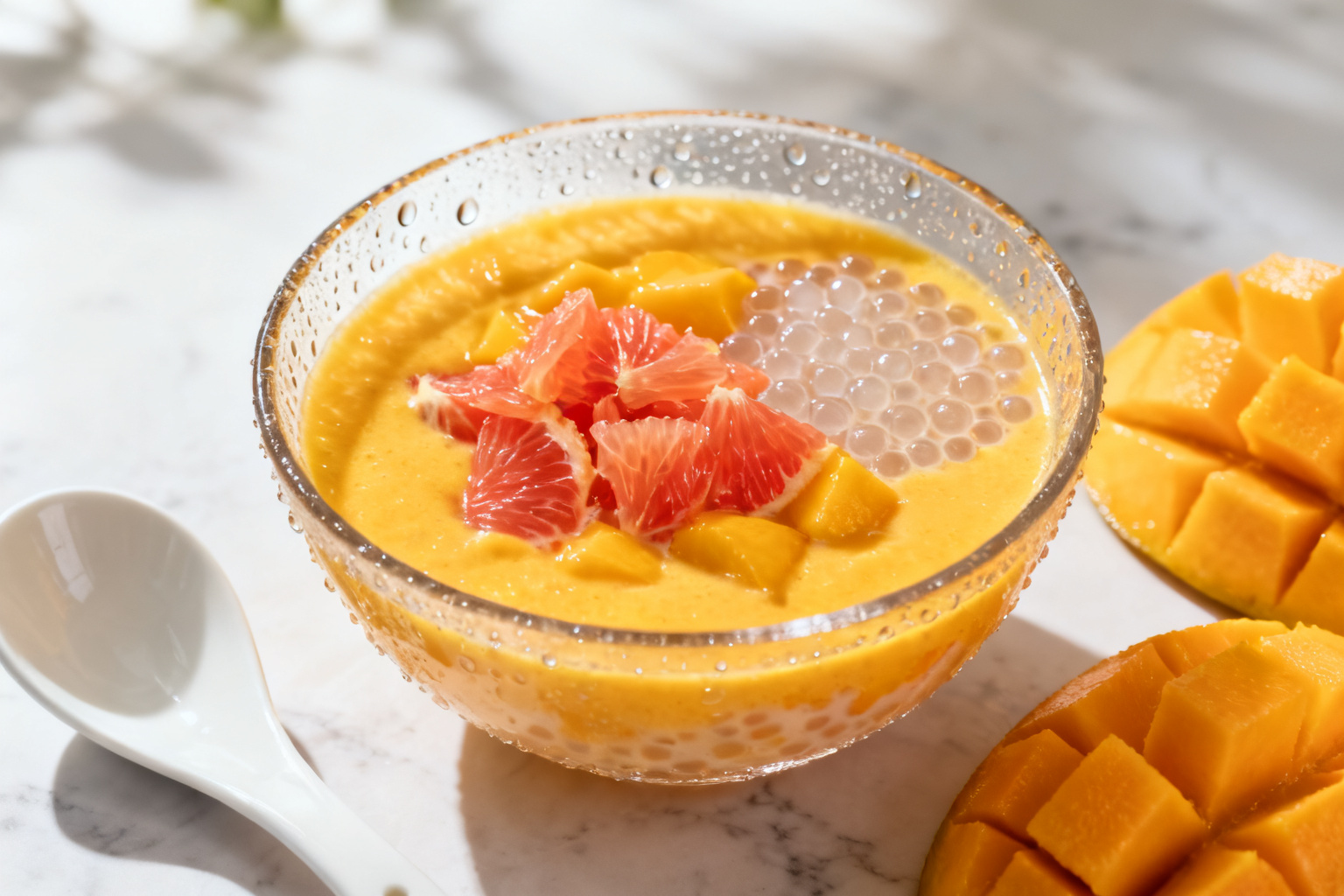
Mango pomelo sago is a Cantonese sweet soup that only makes sense in warm weather. Chilled mango, whole pomelo sacs, tiny tapioca pearls and a creamy base go into a bowl that is served cold enough to bead the outside of the glass. In Hong Kong it turns up at the end of summer meals, and it tends to disappear before the plates are cleared.
The argument here is narrow. Mango pomelo sago is not a fruit cup with cream poured over it. It works because three textures land at the same moment, each one doing a different job, and everything else, from the temperature to the fruit to the size of the bowl, follows from that single decision.
In This Article
Three Textures Decide Whether the Bowl Works
Start with the mango. A ripe mango gives the bowl its body and most of its sweetness, which is why the fruit is usually worked into a thick puree rather than diced and dropped in whole. The puree is what coats the sago and carries the flavour from the spoon to the tongue. A watery base tastes thin no matter how much fruit went into it.
Then come the sago pearls, and they are the reason the dessert has a bite. Cooked properly they stay small, translucent and slightly chewy at the centre. Left too long in the pot they collapse into a soft paste that disappears against the mango, and the bowl loses the small resistance that makes it worth eating slowly.
The third texture is the one people notice last and remember longest. Pomelo sacs should burst when you press them, releasing a tart, faintly bitter juice into the sweet base. That burst is the contrast the whole bowl is built around. When the three are balanced, the first spoonful is sweet, the second is bright, and the third gives your teeth something to do.
Holding that balance is harder than it sounds. Sago keeps softening once the bowl is cold, and pomelo gives up its juice into the base as it sits. The bowl worth ordering is the one where the three still read as separate things on the spoon, not as a single pink cream.
Cold Is an Ingredient Here, Not a Step
Chilling does more than make the dessert pleasant in July. Cold mutes the edge of sugar, so a bowl served properly cold tastes fresher and more fruit-forward than the same mixture at room temperature, where sweetness starts to cover both the mango and the pomelo. Cold also tightens the sago slightly and keeps the sacs from collapsing into the base.
This is where a Mango Pomelo Sago Dessert that is built to be eaten cold earns its place in the refrigerator. It arrives as a finished bowl rather than a base you still have to chill, stir and adjust, so the mango, the fruit and the pearls are already in the proportions the dessert needs. Keep it cold until the spoon is in your hand, and take anything beyond that from the pack.
Restaurants often push the temperature further by serving the bowl over crushed ice, which holds it steady through a long meal. At home, a bowl straight from the refrigerator is close enough. What you are protecting is the gap between cold fruit and a warm room, because the dessert lives in that gap.
There is a reason the bowl is small in most shops. A few spoons of something cold and sharp finish a meal well; a pint of it would not, and the last third always tastes flatter than the first.
Every Cantonese Sweet Has a Job, and This One's Is Refreshment
Cantonese sweet soups are a family rather than a single dish, and each member is built for a different moment. Double skin milk is set and dairy-rich, closer to a custard than a drink, and it can arrive warm when the point of dessert is comfort. A snow fungus dessert is light and almost watery, with a texture that matters more than the flavour. Guilinggao is herbal and deliberately bitter, which is why it comes with syrup on the side. None of them are built around cold fruit the way mango pomelo sago is.
That difference matters at the moment of choosing, because the cold bowls in a Cantonese dessert shop do not do the same work at all.
| Sweet | Temperature on the Table | The Tell in a Good Version |
|---|---|---|
| Mango pomelo sago | Deeply chilled, often over crushed ice | Whole pomelo sacs that still pop; blended pink pulp means the texture was traded away |
| Double skin milk | Warm or chilled, set in a shallow bowl | A paper-thin skin on top; if it is broken or missing, the set was rushed |
| Snow fungus dessert | Chilled or cool, in a light syrup | Fungus with a little crunch left in it, not a soft jelly |
| Guilinggao | Chilled, with syrup poured at the table | How much syrup you add; the jelly is bitter on its own by design |
Read that way, mango pomelo sago is less a variation on the other sweets than a small category of its own: fruit first, cream second, something to chew third. It is also the one in the group that changes most with the weather, which is why a hot afternoon suits it better than a cold January evening.
The Pomelo Is What Separates It From Every Other Mango Dessert
Take the pomelo out and you still have a mango dessert. Put it back and you have mango pomelo sago. Pomelo is a large, thick-skinned citrus whose segments break into firm teardrop-shaped sacs, and those sacs are the point: they hold their shape, they burst under pressure, and they bring a clean bitterness that keeps the mango from turning cloying.
Handling decides the result. The sacs have to be pulled from the membrane without being crushed, which is slow work and the reason a careless version blends them in. A bowl where the pomelo has gone into the puree tastes sweeter and duller, and the colour turns an even pink that looks pretty and says very little.
The mango matters in a quieter way. A fibrous, deeply coloured fruit gives a puree with some grain and a stronger aroma, while a smooth pale one gives silk and not much else. A bowl can survive a modest mango as long as the citrus is good, because the pomelo is doing the work the fruit cannot.
Some kitchens swap in grapefruit when pomelo is expensive or out of season. It works, but the bitterness is sharper and the sacs are softer, so the balance tips toward bitter instead of bright. When you buy a chilled bowl rather than making one, whole sacs are the first thing to look for and separate sago pearls are the second.
An Afternoon Bowl Beats a Dinner Bowl
Mango pomelo sago is at its best somewhere between lunch and the end of a hot day. It makes a natural chinese dessert for afternoon tea: cold, light enough not to end the conversation, and sharp enough to reset your palate after something fried or spicy. A small bowl does more than a large one, because the contrast fades once you are full.
Serving it at home is mostly restraint. Keep the bowl in the refrigerator until the last minute, put a little crushed ice underneath if the day is hot, and add fresh mango cubes on top when you want more fruit than cream. A spoon of coconut cream stirred through makes it richer; a squeeze of lime pulls the pomelo forward when the mango is very sweet.
What it pairs with is less about food than timing. It is not an opener, it is a full stop: good after dim sum, after noodles, after anything with chilli in it. Set a bowl down in the middle of an afternoon and it does not need a meal around it at all.
The same bowl works late at night, when a full dessert feels like too much and something cold and fruity is exactly right. It does not need an occasion, only a warm afternoon, a cold spoon and ten quiet minutes.
What to Look For When Someone Else Makes It
Most people meet this dessert in a restaurant or buy it already chilled, and the range in quality is wide. Colour is the first signal. A bowl that leans pale gold and looks slightly grainy is usually reading as fruit, while a flat, bright orange often means the colour is coming from something other than mango.
Then check the pearls and the fruit. Sago should show as small separate dots rather than a thick paste at the bottom of the bowl, and there should be whole pomelo sacs, not a uniform pink. If everything is smooth, the two textures that make the dessert interesting have already been lost.
Temperature comes last because it is the one thing you cannot fix afterward. A bowl that has been sitting out has already started to soften, and putting it back in the refrigerator will not undo that. The same three checks apply whether you are reading a menu or choosing something to keep at home for the weekend.
For a dessert this simple, that is the whole checklist: cold, fruit-forward, and textured enough that you notice it. The rest of the wellness Chinese desserts in the collection follow the same idea, and this bowl is the summer end of it.
One Thing to Remember
A bowl of mango pomelo sago stands or falls on contrast: cold mango cream, whole pomelo sacs that still burst, and sago with a little chew. Lose any one of the three and you have a sweet pink puree instead of a summer dessert.
Frequently Asked Questions
What does mango pomelo sago taste like?
Sweet ripe mango comes first, then a tart, faintly bitter burst from the pomelo, with a creamy base holding the two together and small chewy pearls underneath. It is served cold, which keeps the sweetness in check and makes the fruit taste brighter.
Is mango pomelo sago the same as mango sago?
Not quite. Mango sago is mango, cream and pearls. Mango pomelo sago adds the citrus, and that addition changes the balance: the bitterness and the burst of juice are what stop the bowl from tasting like a dessert smoothie.
Can it be eaten warm?
It is built as a cold dessert, and warmth softens the sago further while making the mango taste heavier. If you want it less cold, let the bowl stand for a few minutes rather than heating it.
Why pomelo instead of grapefruit?
Pomelo is sweeter and less aggressive, with firmer sacs that hold their shape. Grapefruit works in a pinch, but it pushes the bowl toward bitter and the texture turns softer.
How should a chilled bowl be stored?
Keep it cold and follow the storage instructions on the pack. Texture is the first thing to fade once the bowl warms up, so eat it soon after it comes out of the refrigerator.
Try It Yourself
The bowls mentioned in this article, straight from our kitchen.
Mango Pomelo Sago Dessert
View Product