Blog
Why Matcha and Pistachio Belong in a Morning Congee
Matcha and pistachio belong in a morning congee for the same reason salt belongs in bread: the base is neutral and everything else is decided on top of it. Most people who grew up eating congee for breakfast have an opinion about thickness before they have an opinion about anything else, and that is the real variable. Rice cooked down in water tastes faintly sweet and little more. Put something bitter and green next to that and you get a different breakfast rather than a gimmick.
That is the case for a matcha congee, and for the pistachio that goes with it. Green tea powder gives the bowl a grassy edge and a colour that looks wrong in a savoury context for about three seconds. Toasted pistachio brings fat, a little salt and some resistance under the spoon. Neither ingredient asks the rice to do anything it cannot do. What follows is how the pairing works, where it sits against the older bowls, and how to fit it into a morning with no spare minutes.
In This Article
A Bowl That Already Had Rules
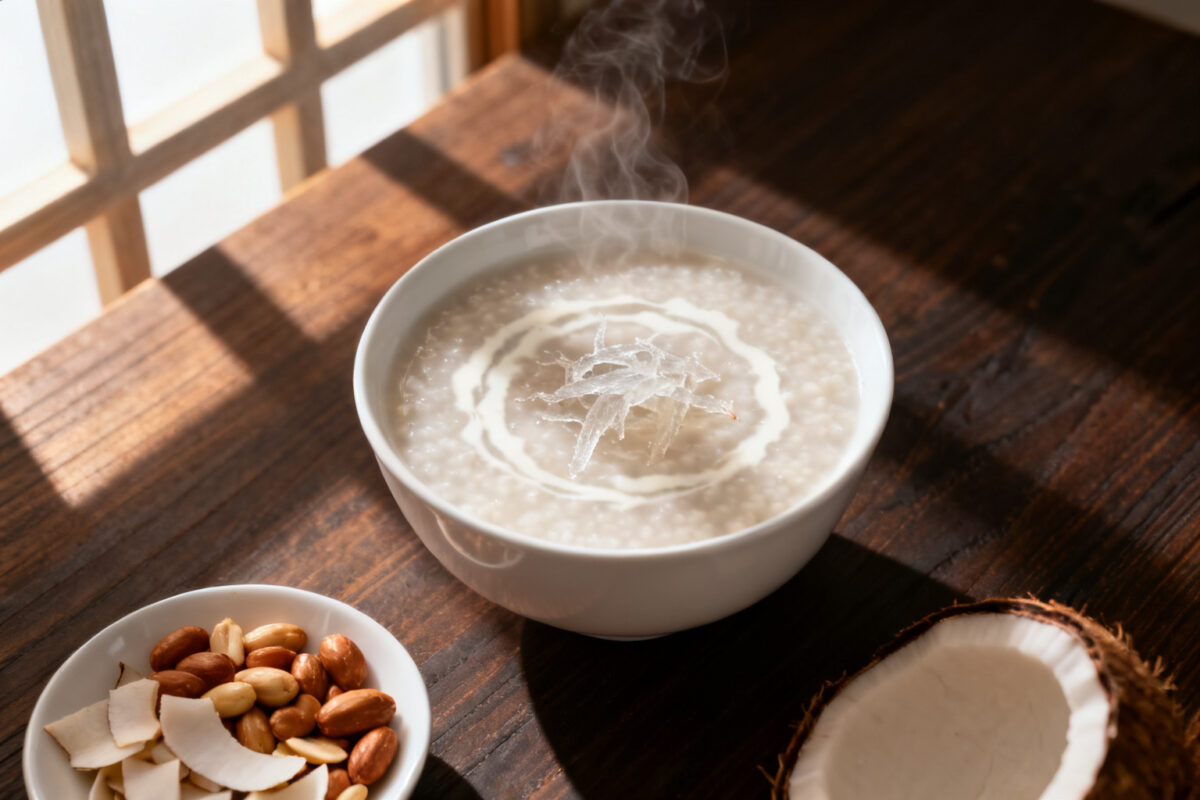
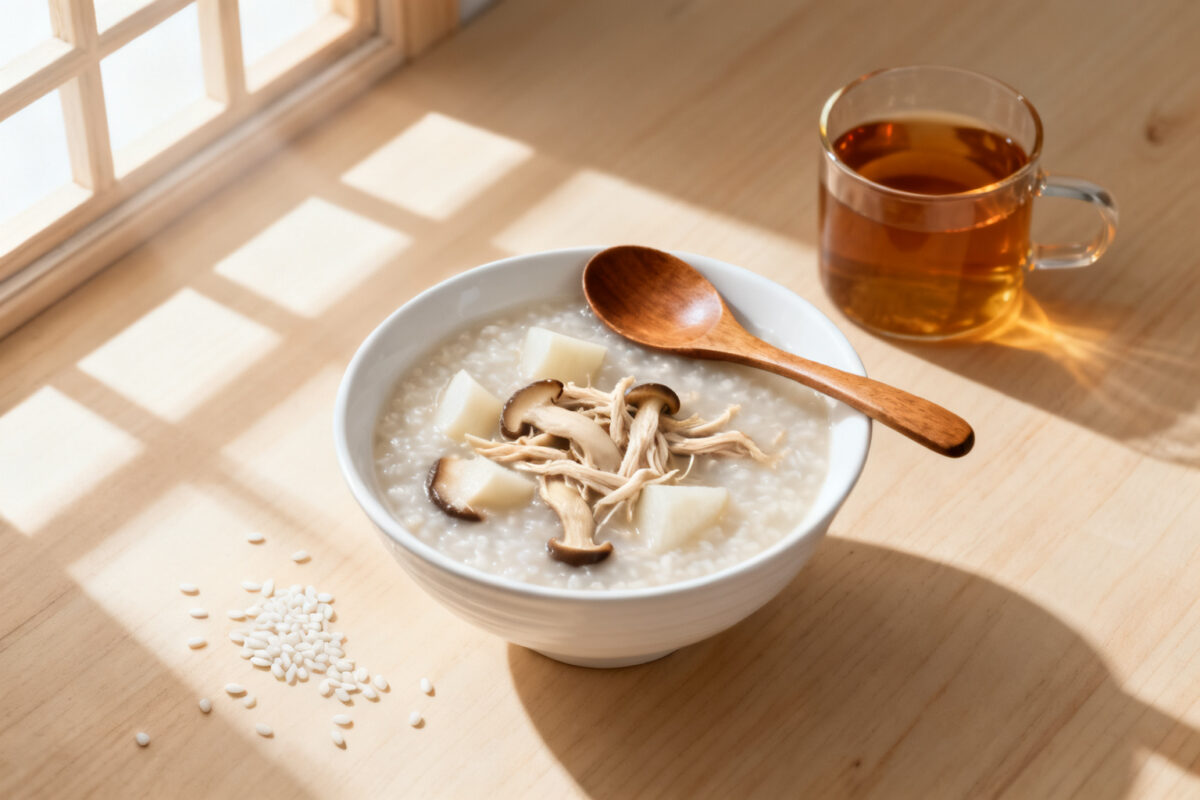
Congee is not one dish. The chinese breakfast porridge most people picture is rice and water cooked until the grains collapse, but the family runs wider than that. There is five white congee, where five pale ingredients cook down together until the bowl turns soft and faintly sweet. There is bird nest congee, the banquet version, judged almost entirely on the clarity of the liquid underneath, because the expensive thing floating in it carries very little flavour of its own. Both are eaten the same way, with a spoon and not much conversation.
The rules behind those bowls are old and specific. A proper spoonful should hold its shape for a second before it gives way. The rice should be broken but not pulverised, and the liquid should taste of grain rather than of the water it came from. None of that depends on who is cooking, a grandmother in Guangzhou or a person opening a bowl at a desk at nine in the morning. Change the toppings and you have a new dish. Change the texture and you have a different food altogether, which is why texture is the part worth protecting. Anyone who has eaten a thin, hurried version knows the difference immediately, even without the vocabulary for it.
Fast Is Not the Same as Rushed
The easy mistake with any fast bowl is to treat speed as the goal. Speed is a side effect. A pot pushed at high heat with too much water gives grains that never break and a liquid that tastes thin, and no amount of salt later will fix it. Slow heat does something else to the starch. It sweetens, the silky texture arrives, and the smell in the room changes from steam to food. That difference is what people mean when they call a bowl home made, and it is not romantic. It is chemistry that was given time.
This is where soy milk congee earns its place. Cooking rice in milk instead of water thickens the bowl faster, because the solids are already in suspension, and it rounds off the sharper edges of whatever joins it later. It also catches on the bottom more easily, which is the trade. The heat has to come down before the bowl comes together, and how thick it should end up is genuinely arguable, since it changes with what you eat alongside it. None of that needs stock, which is why a plant based congee is not a lesser version of anything. It is a different bowl with its own logic.
What You Notice First, and in What Order
With a hot bowl the sequence is always the same. Warmth arrives before flavour, because the first thing that reaches you is steam. Then comes texture, whether the spoon drags or slides through the rice. Only after that do you register the individual ingredients, and by then the bowl is often half gone. A warm congee for cold mornings is doing half its work before the first taste, simply by being hot. A bowl that arrives lukewarm never recovers, no matter what sits on top. It is also why the fix for a flat bowl is rarely more salt. Seasoning is the last lever, not the first.
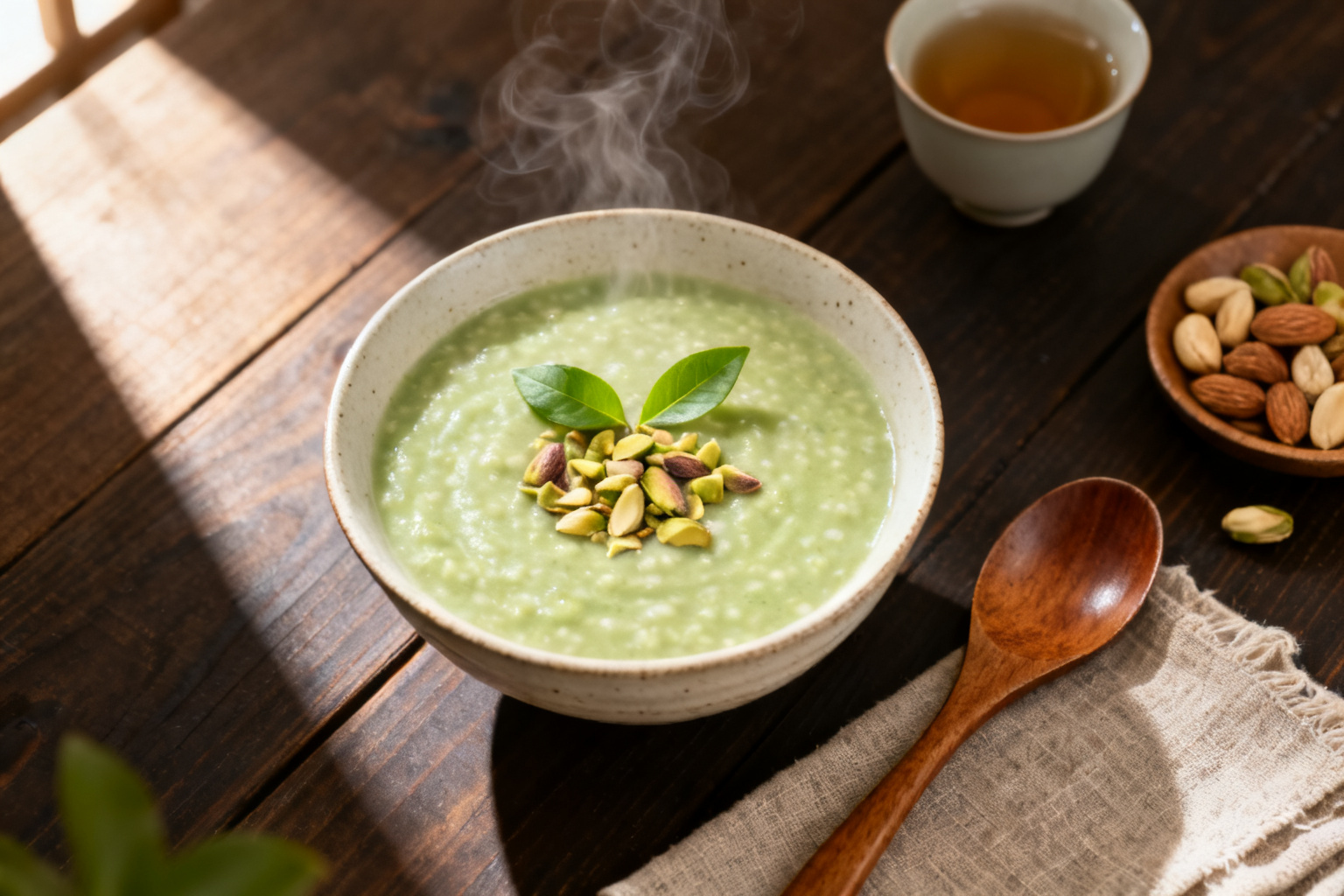
Matcha Pistachio Congee is built to be met in that order. The bowl arrives hot, the rice base gives under the spoon, and the matcha sits over it as a green, slightly bitter edge rather than a sweet one. The toasted pistachio is the last thing you reach, small pieces with a little salt and enough crunch to reset your mouth between spoonfuls. It reads as a savoury breakfast with a tea finish, not as a dessert pretending to be one. That distinction matters at seven in the morning, when sweet is the last thing anyone wants.
| What You Meet | Where It Comes From | How to Read It |
|---|---|---|
| Steam | The heat held in the bowl | If you have to wait a second, it is right |
| Soft rice | Time on the heat | It gives under the spoon without collapsing |
| Green edge | The matcha | Even colour, no dry pockets |
| Crunch | The pistachio | Small enough to stay on the spoon |
The Hours That Never Get Written Down
Most congee is eaten at hours nobody writes down. Six in the morning before a shift, eleven at night after one, or the gap between a landing and a hotel bed. It survives all of them because it asks almost nothing of the person eating it: no knife, no table, no conversation, no attention. A quick congee for busy mornings only has to be hot and coherent, and the second part is what separates it from hot water with rice in it. Coherent means the bowl tastes like one thing rather than several things placed beside each other.
The office version is harder, because a bowl that travels loses the thing that made it good. Carried across town and warmed again, it thickens, and a texture that was silky at home turns heavy. So congee lunch at the office works better when the bowl starts thinner and the toppings stay apart until the last minute. The nuts keep their snap, the green powder keeps its colour, and the whole thing comes back together in about the time it takes to read one email. A little planning, none of it difficult, is the entire trick.
Two or Three Times a Week, Not Seven
Nobody eats the same bowl seven days running. The people who keep congee in the rotation tend to have it two or three times a week, in the slot that would otherwise go to nothing at all: the ten minutes when you are too hungry to decide and too tired to cook. That is the comparison worth making, a bowl against a skipped meal rather than a bowl against dinner. Breakfast is the meal most often lost and the one most easily rescued, which is why the rotation usually starts there. If the plainer versions belong in the same week, they sit beside this one under nutritious porridge.
The same family covers the other end of the day, where mango sago works on the same logic as a savoury bowl: a soft base, one fruit carrying the loud part, and small pearls that give your teeth something to find. A sago dessert bowl is the plain version of that idea, and it explains why a sweet bowl can close a meal properly instead of feeling like a snack. After a few of these, the line between breakfast and dessert stops being interesting. What matters is whether the bowl was made carefully, not which side of noon it lands on.
One Thing to Remember
Congee is a carrier, not a flavour. The rice is there to hold heat and texture while one or two strong ingredients do the talking, which is why green tea and toasted nuts can share a bowl without turning it into a novelty.
Frequently Asked Questions
Is one bowl worth the money?
It is worth it if the alternative is the breakfast you would otherwise skip. The cost sits near a coffee and a pastry, and unlike those it leaves you with something warm, savoury and finished in minutes. You are paying for the mornings it removes a decision from, and there are more of those than most people admit.
How hot should it be when you eat it?
Hot enough that you wait a second before the first spoonful. That is when the rice base smells of grain and the green tea reads as green rather than flat. Once it drops to lukewarm the texture tightens and the pistachio softens, so eat it soon after it is ready instead of carrying it around.
Can it work as a lunch at a desk?
Yes, provided the crunchy part stays separate until you sit down. A bowl that waits loses texture faster than it loses heat, so the nuts are better added at the desk than before you leave. Add something cold and crisp on the side, a few leaves or a piece of fruit, and it stands as lunch rather than a snack.
How is it different from a plain rice congee?
The base is the same idea, but the top half is doing more work. Plain congee leans on side dishes, pickles, salted egg, dried pork, to carry the flavour. This one carries its own, so it needs nothing beside it, which makes it the easier bowl to eat alone. Both have a place in a week, just not the same one.
What do matcha and pistachio taste like together?
Bitter and green first, then round and salty. The green tea hits the front of the mouth and fades quickly, and the pistachio arrives behind it with fat and a little salt. That is why the bowl does not read as dessert. Think of a strong cup of green tea with nuts beside it rather than a sweetened latte.
Try It Yourself
The bowls mentioned in this article, straight from our kitchen.

Matcha Pistachio Congee
View Product