
Blog
Millet and Pumpkin Porridge for a Gentle Family Breakfast

Seven in the morning is not a cooking hour. Someone is hunting for a school bag, someone is deciding whether a coat is needed, and the pot on the stove is either already warm or it is not going to happen at all. A breakfast that works for a family has to survive that noise: it has to be ready, mild enough that nobody argues with it, and good enough that you would choose it on a quiet Sunday too.
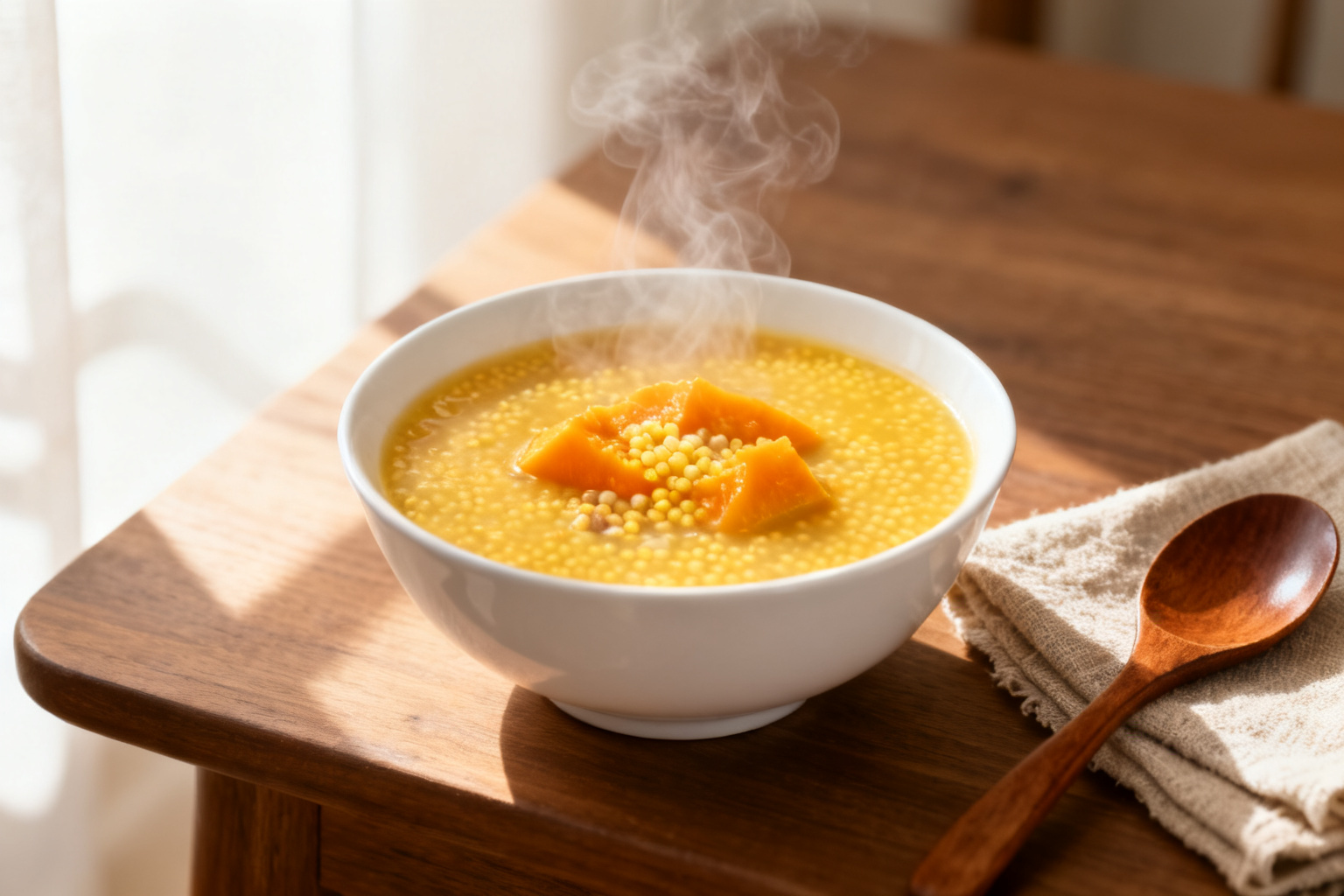
Millet and pumpkin porridge is the bowl we keep coming back to for that slot. The grain stays a little coarse, the pumpkin melts into it, and the whole pot ends up the colour of late October. Nothing in it needs defending at the table, and nobody has to be persuaded that it is good for them. What follows covers how this bowl sits beside the plainer ones and the sweeter end of the family, why it works for a household that eats at different speeds, and how to get one pot onto the table before the first person leaves.
In This Article
What Is Congee Made Of, and Why Millet and Pumpkin Share a Pot
Ask what is congee made of and the answer is grain, water and enough heat to take the bite out of the grain. Rice congee is the version most people meet first: white, soft, mild, and usually sharing the table with something salty. Millet works on the same principle with a different result. The grains are smaller, they give way sooner, and they hold a faint toasted sweetness that rice never quite has. Pumpkin porridge builds on that base. The pumpkin stops being a piece of vegetable and becomes body, colour, and a soft sweetness that arrives at the end of the spoon rather than the front.
That pairing is why millet porridge and pumpkin are treated as one dish rather than two ingredients sharing a pot. Millet on its own can read thin and slightly austere, especially if it is cooked fast. Pumpkin on its own is sweet but loose. Together the texture lands between soup and pudding, thick enough for a spoon to stand in and soft enough to drink from the rim. It is also forgiving. Leave it five minutes longer than planned and it does not turn bitter or gluey, it simply thickens, which is a useful thing in a house where nobody sits down at the same time.
The Rest of the Family, From Black Sesame to Mango Sago
The millet bowl is one member of a large family. Black sesame porridge is sesame ground into rice until the whole pot turns slate grey, and it is the deepest and richest of the plain sweet bowls. Almond congee gets its body from ground almond stirred into the grain, so it drinks more like milk than like porridge. Goji berry porridge is lighter, and the dried berries plump up in the warm grain and leave a faint tartness behind them. Matcha congee depends entirely on timing, because the powder goes in at the end and turns dull if it is cooked.
Then there are the bowls that behave like dessert. Mango sago is barely cooked at all: small pearls, ripe mango and something cold and creamy, at its best properly chilled rather than warm. Bird nest congee belongs to celebrations and to texture, which is what people are paying for in that bowl. None of these are competing for the breakfast slot. They sit at the other end of the same idea, which is grain, liquid, patience, and one thing added at the end that changes everything. Some of the bowls in this family are made ready to eat, and they sit together in the instant soup collection.
Why One Pot Suits a Family Better Than Four Plates
Families do not eat at the same speed. One person is out of the door at half past seven, another comes back for a second bowl at eight, and a third wants something warm at four in the afternoon. The case for easy breakfast porridge for families is not that everyone will agree on a favourite food. It is that nobody has to be talked into this one, and it warms back up without turning into something else. A single pot also removes the small decisions that make mornings expensive: no menu, no separate pans, no negotiation about who gets what.
The bowl we make for this job is Millet and Pumpkin Porridge. The millet is cooked until it softens but keeps a little bite, the pumpkin is folded through until it disappears into the grain, and the whole thing is packed so that only the warming is left to you. That is what ready to eat means in practice here: no soaking overnight, no forty minutes of stirring, no pot to scrub afterwards. Anyone looking for a quick congee breakfast for busy mornings is usually looking for exactly this, a hot bowl with a spoon already in it before the kettle has finished.
Heat First, Then Texture, Then Everything Else
What we try to protect in this bowl is not the recipe but the order in which you notice it. Temperature comes first, always. A lukewarm bowl tastes of nothing, and no amount of pumpkin fixes that. Texture comes second, and it tells you whether someone was paying attention: millet grain a little coarser than you expected, the pumpkin thick where the spoon goes in. Flavour arrives last, and by then most people have already decided. That order is why we argue about heat before we argue about anything else.
The other reason the bowl travels well through a morning is that it does not need much beside it. Salt and a little butter will take it towards savoury. A spoon of yoghurt or a few berries will take it towards dessert. Eaten plain, it tastes of grain and squash and nothing else, which is the version children tend to prefer.
| How You Serve It | What the Texture Does | Mornings It Suits |
|---|---|---|
| Straight from the pot | Loose and steaming, pumpkin still settling into the grain | When everyone leaves within twenty minutes |
| Rested for five minutes | Thick enough to hold a spoon standing up | Weekends, when people eat in shifts |
| Chilled overnight | Firm and almost sliceable, closer to a dessert | Warm afternoons and late evenings |
| Thinned with hot water or milk | Pourable again, easy to sip from the rim | Anyone who wants a lighter bowl |
There is no correct answer to how thick it should be. In some kitchens it is poured like soup, in others a spoon should stand in it, and both versions are defended fiercely by the people who grew up eating them. We lean thicker because it holds its heat longer, but that is a preference rather than a rule.
The Standard a Bowl Has to Meet
Tradition, in a kitchen, is not a style you put on a label. It is a set of measurements that already work, arrived at by people who cooked the same thing every week for years. The standard for a bowl like this one is narrow and clear. The grain has to be cooked past raw but short of paste, the pumpkin has to bring its own sweetness, and the two have to meet somewhere in the middle rather than sit in separate layers. Change anything that breaks one of those three and the bowl stops being worth making.
Good taste has layers, and a porridge is a fair place to test that idea. There is the first spoon, which should be warm and mild. There is the middle of the bowl, where the pumpkin is thickest and the millet has taken on most of the liquid. Then there is what stays after you swallow, a faint toasted note that says the grain was cooked properly rather than rushed. A bowl with only the first layer is fine. A bowl with all three is the reason this grain has stayed on tables for as long as it has.
One Thing to Remember
Millet and pumpkin need nothing added to taste finished: the grain breaks down before the pumpkin does and the pot thickens on its own. What a family breakfast actually needs is one warm bowl everyone accepts, not a separate dish for every person at the table.
Frequently Asked Questions
Is a bowl of millet and pumpkin porridge enough on its own?
It is enough as the warm centre of breakfast, and most households put one thing beside it: a boiled egg, a slice of toast, a few pieces of fruit. The bowl brings heat, softness and a mild sweetness, and the rest of the table brings contrast. Eaten on its own it still counts, especially on a morning with no time to assemble anything else.
How do you serve one pot to people who want it differently?
Keep the pot thick and thin each bowl at the table. Pour a little hot water or warm milk into the bowls that want it looser, and leave the rest standing. It takes a minute and saves cooking twice. The same approach handles sweetness: let people add what they like rather than deciding for them before the pot leaves the kitchen.
Can it work outside breakfast?
It works at four in the afternoon and at eleven at night, which are the two times people most often want something warm and cannot face cooking. Chilled, it turns firm and sweet enough to serve as a dessert after a light dinner. A small bowl is usually the right size at those hours, with tea alongside.
How is this different from instant oatmeal or a takeaway congee?
Oatmeal is oats, and the flavoured sachets taste mostly of sugar and salt. A takeaway congee is a good bowl when it travels well, but it rarely does, and it arrives lukewarm and set. This is grain and pumpkin cooked the long way, then packed so that only the warming is left to you. The texture stays coarse instead of turning to paste.
Is congee the same thing as porridge?
Broadly, yes. Congee is the word used across much of Asia for grain cooked in a lot of liquid until it collapses, and porridge is the English umbrella term covering it along with oats, barley and anything else cooked that way. In practice the difference is regional habit rather than technique, and both words leave room for a bowl to be thin or thick.
Try It Yourself
The bowls mentioned in this article, straight from our kitchen.
Millet and Pumpkin Porridge
View Product