

Blog
Global Herbal Tea Benefits: How Different Cultures Use Herbs for Daily Wellness

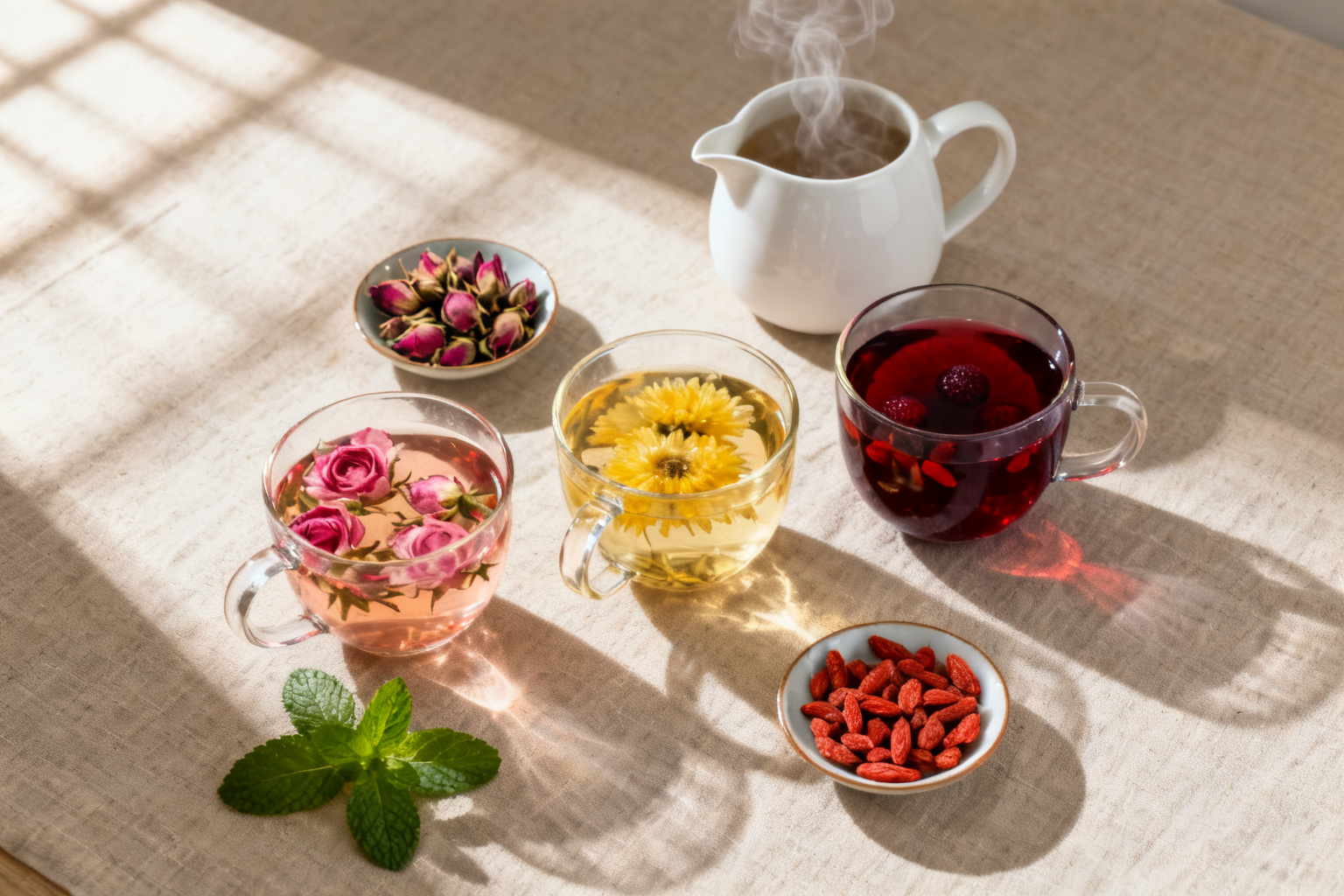
Almost every country that drinks tea has landed on the same small habit: a handful of dried leaves, flowers or roots, hot water, and a few minutes of waiting. China settles it into a covered cup. Morocco pours it from a height into small glasses. India boils it on the stove with milk and spice. The drink changes completely from place to place. The pause it creates does not.
That pause is what this article is about, and it is also what the word benefits means here. Not a promise that a cup will fix a long week, but the things a person actually gets: a marker in the day where nothing is required of you, something warm in your hands for ten minutes, and a taste that stays interesting enough to come back to. Below are the herbs different cultures reach for, when they reach for them, and how to borrow the parts that fit your own week.
Why So Many Countries Landed on the Same Habit
Most herbal cups began as a way to make hot water taste of something. Dried mint in Egypt, fennel seed in southern Europe, lemongrass in Thailand, chrysanthemum in China, hibiscus in West Africa and later in Mexico. The plant was usually whatever grew nearby and dried well in the local sun, which is why the world’s herbal teas look so different and behave so similarly. None of them need a machine, a paper filter or milk. A pot, a cup and a few minutes cover the whole method.
The second thing they share is timing. Few cultures drink herbal tea with a meal. They attach it to a slot: the first hour of the day, the flat hour after lunch, the last hour before sleep. Morocco takes mint tea after dinner and again at breakfast. Japan drinks cold barley tea through the hottest afternoons of summer. France keeps lime flower for the end of the evening. The herb is local, the slot is universal.
Read that table as a shape rather than a list of recipes. The herb changes, the vessel changes, the temperature changes, and the slot stays where it was. Once you notice the slot, choosing a tea gets much easier, because you are no longer asking which herb is best in the abstract. You are asking what you want the ten minutes around it to feel like.
Morning Cups and What They Are Really For
The morning cup is a different animal in each country. In India it is usually masala chai, black tea boiled hard with milk, ginger and cardamom, and it is less about the leaf than about the boiling, which is what makes it thick. In Japan, roasted barley is drunk cold from morning in summer. In Morocco, the day opens with the same mint tea that closed the night before. What they share is that none of them are delicate. Morning cups are built to be made quickly, in quantity, by someone who is not fully awake yet.
Borrowing the idea works better than copying a recipe. A morning cup should be cheap enough to make badly, hot enough to hold with both hands, and simple enough that you can prepare it before you have decided what kind of day it is. Toasted grain teas and roasted dandelion root sit closest to coffee in weight, if coffee has started to feel like too much. A light mint or lemongrass cup suits a morning that is already busy, because it asks nothing of you.
The Afternoon Slot: Rose, Mint, and the Three O'Clock Pause
The flat hour after lunch is the slot most cultures guard hardest, and it is the one people in offices lose first. In the Gulf, cardamom and saffron go into a small glass mid afternoon. In Chinese teahouses the same hour belongs to flower teas, rose buds, chrysanthemum and osmanthus, often poured into a glass so the colour becomes part of the drink. Rose translates most easily of all, because its appeal is almost entirely aromatic. You smell it before you taste it.
Rose needs a gentler pour than most people give it, and steeping time is where cups are usually ruined. Water at a hard boil flattens the scent and pulls out a soapy edge, so let the kettle rest for two minutes first. Three minutes is enough. A glass cup is worth the trouble, since the point of the drink is partly visual. Whole buds also hold their scent far longer than crushed petals, which is why good ones are sold intact and why you should never press them down in the tin.
Evenings: Chamomile, Chrysanthemum, and the Signal
The evening cup has the least ambitious job and the most ritual attached to it. In Britain and North America it is chamomile, almost always from a bag, almost always in a mug. In France it is lime flower, which tastes of honey and cut grass. In China the evening cup is more often chrysanthemum with a few goji berries, or a light oolong, drunk slowly and refilled. In parts of Latin America, chamomile appears after a heavy dinner, sometimes with a slice of lemon dropped in.
What this night cup does is signal. It is the thing you do instead of starting another task, and its value comes from repetition at the same hour rather than from anything in the leaves. That is also why flavour matters more than people admit: a cup you do not actually enjoy will not survive a busy week. Keep it light, keep it warm, and keep it boring in the best sense. The same cup, every night, is the entire trick.
What the Cup Actually Gives You
Strip away the folklore and three things remain, all of them real and none of them medical. The first is a fixed point in the day. A cup takes about four minutes to make and ten to drink, and that quarter of an hour is often the only part of an afternoon with a shape to it. The second is warmth in the hands, a small comfort but a reliable one. The third is flavour that shifts as the cup cools, which a soft drink never does.
The fourth is the one people underestimate. A drink that is not sweet and not alcoholic gives you something to do at the exact moments when you would otherwise reach for something you had not planned to eat. That is not a promise about anything. It is simply what happens when the alternative to a biscuit is a hot cup you have to wait for. The waiting is part of it.
One honest note before the shopping part. Dried plants vary, and a blend you loved in one season can taste flatter the next. That is normal for anything harvested and dried rather than manufactured to a fixed formula, and it is not a sign you bought the wrong thing. Adjust the amount, not the brand, and give a new tin two or three cups before you decide.
Three Cups to Start Your Own Shelf
Borrowing all of this at once is a mistake. Three cups cover the three slots above, and buying three on the same day is the fastest route to two tins going stale in a cupboard. Start with the slot where you actually have a gap, live with it for a month, then add the next. If you want a place to browse before deciding, the herbal tea for health collection is a reasonable starting point.
For desk hours, the useful thing is a cup that keeps giving through refills, which is where Kudzu Root and Peach Kernel Herbal Tea earns its place. The pieces are large enough to survive three or four pours from the same cup, and the flavour stays rounded instead of turning bitter at the second steeping. Use water just off the boil, give it four minutes on the first pour and six on the second, and keep a lid on between sips.
If that cup feels too quiet for the middle of the day, the rose is its opposite: louder, more aromatic, and better in a glass. Rose and Buddha Hand Herbal Tea pairs the flower with citrus peel, so it smells of a garden and a kitchen at the same time. Buddha hand alone is sharp, and the rose rounds it off. Steep it below boiling for three minutes, and skip sugar for the first few cups so you can taste what the peel is doing.
Where the rose is the loudest of the three, the last one is the softest and belongs at the end of the day. Goji Berry and Raspberry Herbal Tea tastes of cooked fruit more than of flowers, which makes it the easiest to like and the hardest to describe. The raspberry gives it a dry finish that stops it short of juice. Brew it for five minutes, let it sit for two, and it takes ice well in summer.
A shelf with one tin per slot is a complete setup, and it costs less attention than any single diet plan. The morning cup wakes you up, the afternoon cup interrupts the day, the evening cup ends it. None of them need to be expensive or rare to do that job. They only need to be repeated.
| Where | What Goes In the Pot | When It Is Drunk | What It Is Poured Into |
|---|---|---|---|
| Morocco | Spearmint with green tea | After dinner and at breakfast | Small glasses, poured from a height |
| Japan | Roasted barley | Hot summer afternoons | A tall glass, chilled |
| China | Chrysanthemum with a little rock sugar | Late afternoon | A covered glass cup, refilled through the day |
| Egypt | Dried mint | After the evening meal | A small glass, very sweet |
| France | Lime flower | The last hour before bed | A mug, no sugar |
FAQ
Is loose herbal tea worth the extra effort compared with a teabag?
Yes, if you drink it more than twice a week. Loose flowers and leaves expand properly in the water, so the second and third cups still taste of something, while a bag usually gives one good cup and then goes flat. The extra effort is about ten seconds of spooning leaves into a pot. The washing up is the real cost.
What water temperature should I use for flower teas?
Somewhere between 80 and 90 degrees Celsius, which in practice means boiling the kettle and then waiting two minutes. Water at a hard boil flattens rose, chrysanthemum and osmanthus, and the cup turns bitter at the edges. Root and bark blends are the exception and want water straight off the boil.
Can I drink these in the morning instead of coffee?
You can, and plenty of people do, but expect a different kind of morning. Herbal cups do not carry the same lift as coffee, and switching abruptly usually lasts about three days. Most people who make the change keep a small coffee and add a herbal cup beside it, then let the herbal one slowly take over the slot.
How is this different from the herbal tea in a supermarket box?
Mostly in the size and the age of the pieces. Supermarket blends are cut small so they pack tightly and brew fast, which also means they give up everything in the first minute and taste thin afterwards. Larger pieces, whole buds and whole berries cost more per cup but hold their flavour across several pours.
What does herbal tea actually mean?
It means any hot drink made by steeping a plant other than the tea bush, so mint, rose, barley, chrysanthemum and goji all qualify. The confusing part is that one phrase covers fruit, flowers, roots and roasted grains, which behave quite differently in water. Checking which part of the plant you have tells you more than the label does.