

Blog
3 Chinese Desserts You Can Serve in 5 Minutes or Less

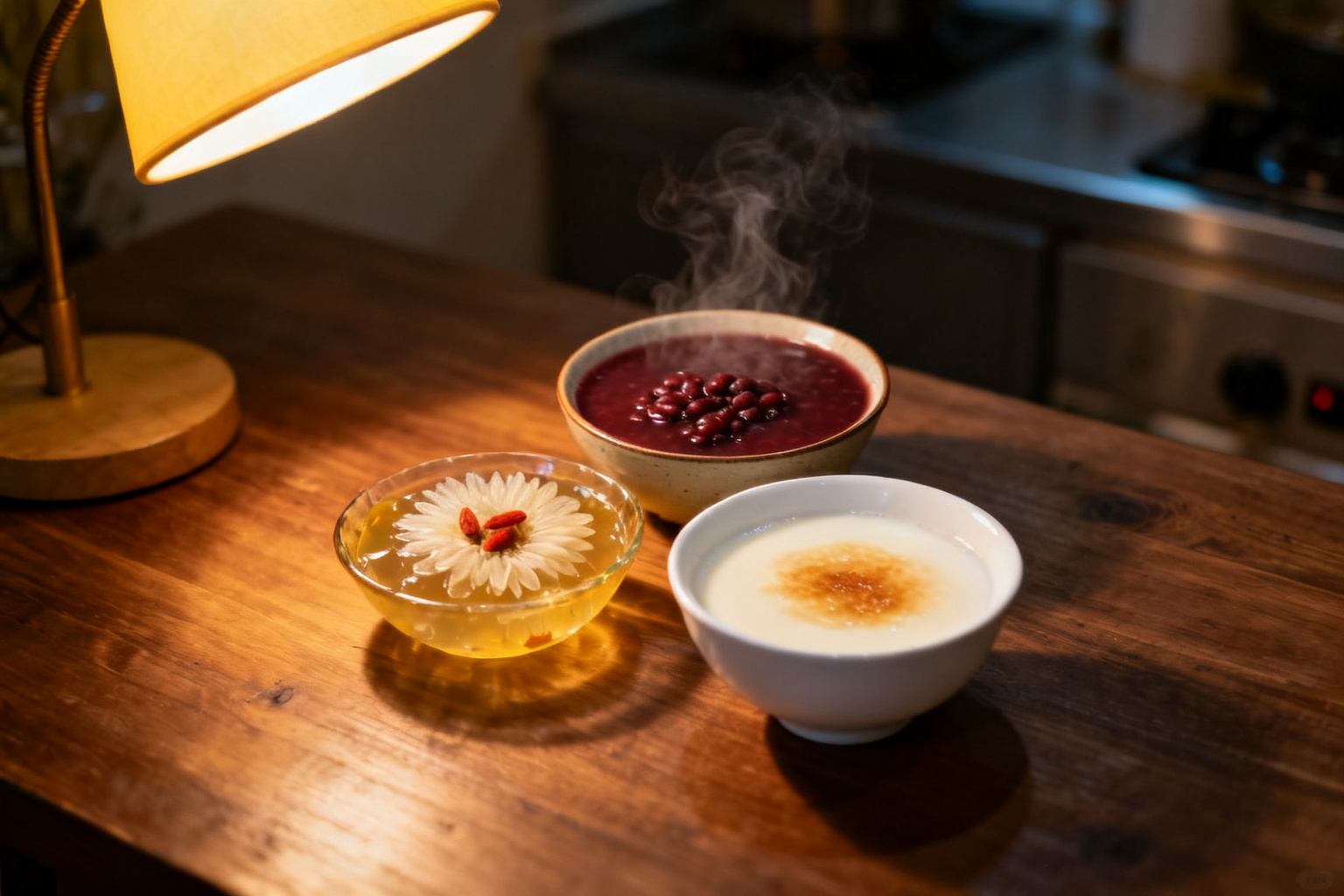
Nine forty on a Tuesday, the laptop is finally shut, and the last thing anyone wants is a recipe with eleven steps and a pot to scrub afterward. A weeknight dessert should cost five minutes and one spoon. That is the only standard worth holding a Tuesday bowl to. It has to be ready when you are, it has to taste like somebody spent an afternoon on it, and it has to be eatable standing up in the kitchen.
Chinese sweet soups and milk puddings suit that hour better than most things in a fridge. They come in small bowls, they are eaten slowly, and they end a meal without the sticky, heavy feeling of a slice of cake at ten at night. The three below cover the three moods a weeknight actually produces: warm, cool, and creamy.
They also share something that matters more on a Tuesday than on a Saturday, which is that none of them asks you to be precise. No whisking to a ribbon, no checking a temperature, no hoping a set happens. You open, you spoon, you eat, and the only decision left is whether to sit down at the table or stay on the floor by the sofa.
The Only Rule Worth Keeping on a Weeknight
The rule is simple. Nothing that needs a timer. A weeknight dessert stops being restful the moment it becomes a project, and most recipes become a project around step four. What you want instead are things that are ready to eat the second the fridge door opens, or that need three minutes in a small pot and nothing more than a stir.
The serving temperature is the part people skip, and it changes the dessert more than any ingredient does. The same bowl eaten straight from the fridge and eaten after ten minutes on the counter are two different things, and one of them will taste sweeter and rounder than the other. Jellies want to be properly cold. Milk puddings want cool but not chilled. Bean soups want steam.
Portion does the rest. Half a cup in a small bowl, eaten slowly, ends an evening neatly. A full bowl turns dessert into a second dinner, and then the night is short again and there is still a kitchen to deal with. Small bowls also make the good ones last, which matters on a Wednesday when you have bought three and the week is not over.
Warm, Cool, or Creamy, and How to Choose
Most weeknights announce what they need. If you have been answering messages since dinner, a warm bowl is the thing that gets you to put the phone down, because it takes two hands and a certain amount of attention. If the day was hot and long, cold and floral is the only thing that sounds edible. If you are tired in a soft way rather than a wired way, the answer is almost always milk.
Texture settles the rest. Warm bean soups are thick and slightly grainy in the best way, jellies are clean and they snap against the spoon, and puddings are silky under a thin skin that people either fight over or quietly push to the side of the bowl. Knowing which of those three you want is most of the decision, and in practice it takes about four seconds.
Warm First, for the Evenings That Were Loud
The first is Aged Tangerine Peel Red Bean Soup, and it is the one to reach for when the day has been noisy. Red beans cooked long enough to give up and turn velvety, with a strip of aged tangerine peel in the pot. The peel is the whole point. Without it, red bean soup is sweet and a little flat. With it, there is a bitter edge at the back of the throat that keeps the bowl from turning cloying halfway through.
Heat it in a small pot over low heat for about three minutes, stirring once, or in the microwave in thirty-second bursts. What you want is steam, not a boil. Boiled hard it thickens and sits in the bowl like porridge, and the peel turns harsh. Take it off the moment the first bubbles come up around the edge of the pot.
Whether the peel reads as bitter or as bright seems to depend on the batch and on how long it cooked, and we have never found a tidy rule for predicting which way it will go. Some bowls taste orange-forward from the first spoon. Others taste almost medicinal at the start and sweet by the fourth. Both are correct, and neither is a fault.
Eat it with a small spoon and nothing else. If it is genuinely dinner and not dessert, add a piece of toast and stop apologising to yourself about it, because sweet bean soup on bread is an old breakfast served late, and it works at ten at night just as well as it does at seven in the morning.
Cool and Floral for Nights That Run Hot
Warm and thick is one answer, and on a night when the air itself feels heavy the opposite works better. The second is Chrysanthemum Crystal Jelly, a clear set jelly with chrysanthemum steeped into it and a few goji berries held near the top. Straight from the fridge it is firm and snaps cleanly under a spoon. Ten minutes on the counter and it softens at the edges, and the flower comes forward.
The aroma is the surprise for anyone who has only had jelly from a packet. Chrysanthemum is dry and slightly honeyed, closer to chamomile than to anything loud and perfumed, and it leaves the mouth clean rather than sweet. The goji berries are there for the small chew they give against all that smoothness, and because they look like they were dropped in on purpose.
The question we get most often about this one is whether it should be eaten straight from the fridge or left out for a while, and the honest answer is that it depends on the weather in your kitchen. In a hot flat, straight from the fridge, no question. In a cool one, ten minutes out is better, because the chrysanthemum is half the dessert and cold mutes it.
Serve it in the smallest bowl you own and skip any syrup. A few spoonfuls of the jelly on their own after a salty dinner do more than a whole slice of something would, and they take no plate, no fork, and no decision about what to do with the rest of a cake for the next three days.
Soft and Milky, for When the Day Was Just Long
Cool and clear is one kind of comfort, and the milk puddings are the other. The third is Double Skin Milk Pudding, whole milk and egg white steamed gently until a skin forms on top, then cooled, skimmed and steamed again so a second, thicker skin sets under the first. That skin is the reason the dessert exists, and the reason it is hard to get right at home.
Under the milk skin the pudding is barely set, softer than a custard and closer to a warm cream. It tastes of milk first and sugar second, which is unusual in a dessert and the reason it does not tire you out after four spoons. Chilled it is clean and almost light. At room temperature it is richer, and the skin loosens and slides a little under the spoon.
Eat it from the edge inward and do not stir. Stirring breaks the skin into the cream and you lose the two-texture thing that makes it worth eating slowly in the first place. The people who love this dessert most are usually the ones who grew up fighting a sibling for the skin, and they will tell you, at length, that the skin is the point.
If you want it as a proper dessert after a small dinner, add nothing at all. If you want it to stand in for dinner on a night when you cannot face cooking, add a spoon of rice or a piece of fruit and call it a light supper, which is a different meal and a perfectly good one. The pudding does not need to be more than it is.
Keeping the Five-Minute Habit Going
Nobody eats this way every night, and the ones who do usually keep two of each in the fridge and one small bowl on the shelf where it can be reached without moving anything else. The weeknight ritual is worth protecting because it is short. Two or three evenings a week is enough to make a Tuesday feel different from a Monday, which is most of what anyone is asking for.
Rotate them rather than repeat them. Warm on the nights you come in cold or tired, cold on the nights you come in late and overheated, milky on the nights you have nothing left to decide with. After a month the choice takes no thought at all, and that is the point of a ritual, not the drama of it.
We are not sure a dessert can rescue a bad week, and we would not promise that it does. What we can say is that a small bowl eaten slowly at ten o’clock changes the last twenty minutes of a day. The phone stays face down. The kitchen stays clean. The evening ends on something sweet instead of on a screen, and that is a small thing that is not nothing.
| If the Evening Feels Like | Serve It | What You Notice First |
|---|---|---|
| Still answering messages at ten | Warm, steaming | The smell, before the first spoon |
| Hot night, no appetite | Cold, straight from the fridge | The snap of the jelly, then the floral finish |
| Tired and a little hollow | Cool, ten minutes out of the fridge | The softness, and the skin on top |
| Feeding someone else as well | One of each, in small bowls | How quickly the table goes quiet |
FAQ
Are ready-made Chinese desserts worth the price compared with making them at home?
Yes, if you count the two hours of simmering as part of the cost. Red bean soup needs soaking and a long, slow pot. Crystal jelly needs setting time and a careful strain. Double skin milk needs two rounds of steaming and a steady hand with the skin. You are paying for the waiting, and for the fact that it came out right.
What is the best way to serve these on a busy evening?
Warm the soup in a small pot for about three minutes and stop before it boils. Take the jelly straight from the fridge. Let the pudding sit out for ten minutes so the skin loosens. Serve each in a small bowl, roughly half a cup, and eat with a spoon rather than standing at the counter with a fork.
Can they work as breakfast or a late-night snack instead of dessert?
Yes, and in southern China they often do. Red bean soup turns up at breakfast, chrysanthemum jelly is eaten on hot afternoons, and milk pudding is a mid-morning thing as much as an evening one. The only real change is portion. A small bowl at any hour counts, and none of these needs saving for after dinner.
How do these compare with a slice of cake or a scoop of ice cream?
They are less sweet and much less heavy, and two of the three are served warm or at room temperature rather than frozen. The texture is the bigger difference. Cake is uniform and jelly is not, and a bean soup gives you something to chew as well as something to swallow. Different endings, not better ones.
What exactly is a Chinese sweet soup?
It is a dessert served in a bowl with a spoon, built on beans, fungus, jelly or milk rather than on flour and butter. The name translates as sugar water, though most versions are far from watery. They are eaten warm in winter and chilled in summer, usually at home, and usually at the end of the day.