
Blog
Bird Nest Congee: Why the Bowl Tastes So Silky

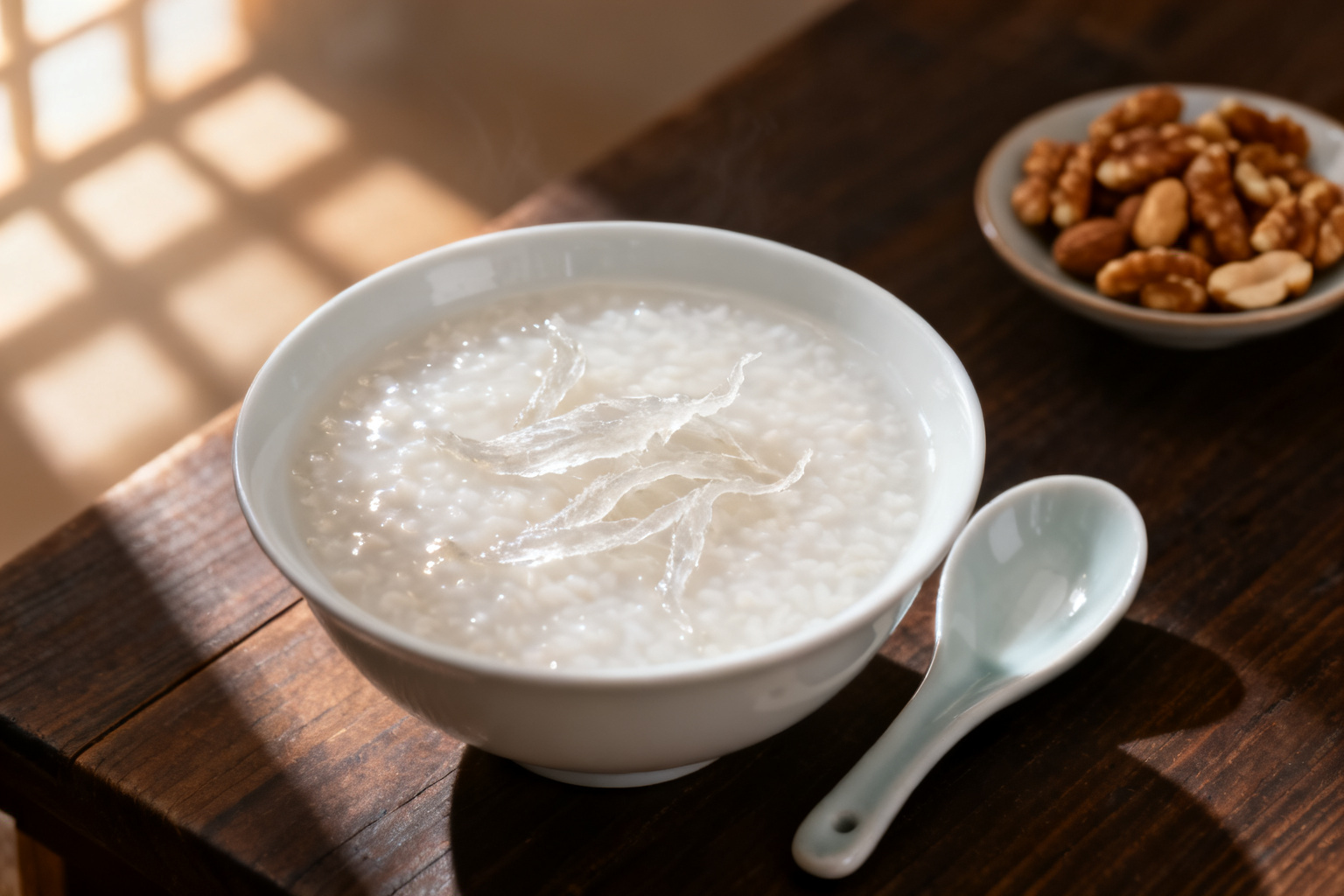
Bird nest congee is usually summed up in one word, and that word is silky. The strands of the nest soften until they sit closer to a suspension than a solid, the rice breaks down around them, and the spoon comes up coated rather than loaded. Most people notice the texture before they notice anything else about the bowl, including the ingredient the bowl is named after.
That silk is not a thickener and it is not a flavouring. It is what happens when two things set at different speeds in the same pot: the protein threads of the nest, which turn slippery and nearly translucent in water, and the starch of the rice, which swells, bursts, and then holds the liquid in place around them. What follows is about where that meeting point sits, and why some bowls of bird nest congee feel like silk while others feel like thin rice soup with something pale floating in it.
In This Article
- Bird Nest Congee Borrows Its Silk From the Nest and Its Body From the Rice
- What Does Bird Nest Taste Like? Almost Nothing, Which Is Why Texture Has to Carry the Bowl
- Silky Congee Texture Comes From Two Gels Setting at Once, and Only One of Them Is Rice
- Silk and Cream Are Not the Same Thing in a Bird Nest Bowl, and the Difference Shows on the Spoon
- Bird Nest Rice Congee Keeps the Silk Close to the Rice and Nothing Else
- Five White Bird Nest Congee and Thick Coconut Bird Nest Congee Pull the Silk in Opposite Directions
- Reheating Is Where Most Bowls of Bird Nest Congee Lose Their Silk
- The Bowl Stays Silky Only While You Are Still Eating It
Bird Nest Congee Borrows Its Silk From the Nest and Its Body From the Rice
Bird’s nest is the dried nest of cave swiftlets, built from a secretion that hardens into fine, slightly uneven threads as it sets. It is mostly protein and water, it carries very little aroma of its own, and it has always been served inside something rather than eaten alone. Once the threads are soaked and gently heated, they take on water, soften, and become slippery without ever fully melting away.
The older dish is bird’s nest soup, and it is worth understanding because it explains the congee. The classic version is a clear, lightly viscous liquid in which the nest is the only thing of substance. Nothing else in the bowl has body, so the nest has to supply both the look of the dish and the feel of it. The soup stays gentle, barely seasoned, and often a little sweet at the edges.
Congee changes the arrangement. Rice brings its own starch, and starch brings body. Once the pot has thickened, the nest no longer has to carry the bowl; it only has to be felt inside it. That is a far easier job, and also a far easier one to ruin, because a bowl with real body can swallow the strands completely and leave you with nothing to notice.
So the silk is a relationship rather than a property of the nest. The nest gives the slip, the rice gives the weight, and the space between them is what your tongue reads as silk. Change the amount of rice, the amount of water, or the heat under the pot, and the relationship changes with it.
What Does Bird Nest Taste Like? Almost Nothing, Which Is Why Texture Has to Carry the Bowl
Anyone who has typed what does bird nest taste like into a search bar has read the same vague answers: not much, faintly eggy, a little sweet. Those answers are honest. The nest has a mild aroma that sits close to cooked egg white, sometimes with a faint mineral note behind it, and a finish that is nearly clean. It does not taste like chicken and it does not taste like the sea, which are the two guesses people make most often.
Much of the smell people notice when they first meet the ingredient comes from the water it was soaked and cleaned in, not from the nest itself, which is why the threads are rinsed before cooking. In a warm liquid the aroma mostly disappears into the steam. What remains is texture and a very quiet savoury-sweet note sitting at the back of the mouth.
Inside a congee, that quietness is the point. The flavour you actually taste comes from the base: rice, or coconut, or yam and lily bulb. The nest contributes the sense that there is something on the tongue, a soft resistance that dissolves slowly, and a faint sweetness that keeps the bowl from finishing flat.
This is also why the seasoning in these bowls stays low. A heavy savoury note or a firm hand with sugar will cover the one thing the nest does well. If you taste a bird nest congee and find it bland, the useful question is not how to add flavour but whether the texture underneath is doing its job. When it is, bland reads as clean.
Silky Congee Texture Comes From Two Gels Setting at Once, and Only One of Them Is Rice
A silky congee texture is usually explained as if it were a single event. It is two. The first is starch: as rice heats in water, the grains take up liquid, swell and burst, and the starch that escapes sets into a soft, weak gel that holds the pot together. The second is the nest: the threads hydrate and turn slippery, but they never set into a gel of their own. They hang.
That difference is why the ratio does most of the work. Too much rice and the gel becomes a paste, thick enough to bury the strands and glue the spoon. Too little and the liquid stays a broth, so the strands sink and the bowl reads as soup. Between those two failures there is a narrow band where the gel is loose enough to let the nest slide and firm enough to keep it from settling.
Thickeners do not get you there. Cream, cornstarch and milk powder all add coating, and coating is not silk. They leave a film on the roof of the mouth that outlasts the swallow, and that film covers the faint note the nest contributes. A bowl thickened that way feels rich for two seconds and dull for the rest of the spoonful.
What a cook actually controls is small and readable in the mouth: how much water, how long the rice cooks, how gently the nest is heated, and whether anything fatty joins it. The table below sets out what each component is doing in the pot, and what undoes it.
| Component | Its Job in the Silk | What Ruins It |
|---|---|---|
| Bird's nest threads | Hydrate into short, slippery strands that hang in the liquid instead of sinking to the bottom | Long hard boiling, which dissolves the strands until there is nothing left to feel on the tongue |
| Rice | Bursts and releases starch that thickens the surrounding liquid just enough to keep the strands apart | Too much rice, or rice cooked until the grains vanish and the whole pot turns to paste |
| Water | Sets the distance between strands, which is the slack in the whole system | Pouring it in at the end, which thins a gel that has already formed and never quite recovers |
| Coconut | Fat that rounds the starch, slows the set, and makes the bowl read as cream first and silk second | A rolling boil, which can split the fat and leave a grainy film behind |
Silk and Cream Are Not the Same Thing in a Bird Nest Bowl, and the Difference Shows on the Spoon
Packaging uses silk and cream as if they were interchangeable, and they describe different sensations. Silk is movement: the liquid slides, the strands pass, nothing stays behind. Cream is residue: fat leaves a film that lingers after the bowl is gone. A bird nest bowl can be either, and one of the three bowls further down is deliberately closer to cream.
Gel is a third word, and it is not an insult. A gelatinous bowl holds its shape on the spoon for a second before it slumps, which is simply what a stronger starch set looks like. Starchy and watery are the two failures at either end: one dries the back of the tongue, the other runs off the spoon and leaves the nest sitting in the bowl.
The practical reason to know these words is that they predict how much of the nest you will notice. Creamy bowls mute it, gelatinous bowls hold it in place, and silky bowls let it move. None of those is wrong. They suit different moods, and the three bowls below split along exactly that line.
| Word on the Label | What It Feels Like in the Mouth |
|---|---|
| Silky | The liquid slides and the strands pass without resistance, and nothing coats the roof of the mouth afterwards |
| Creamy | A fatty film stays on the palate for a beat after the swallow, and the grain of the base is partly hidden |
| Gelatinous | A spoonful holds its shape briefly, wobbles, then slumps, and the strands are locked in place until it does |
| Starchy | The back of the tongue dries slightly, and you can still feel individual softened grains against the roof of the mouth |
| Watery | Liquid runs off the spoon before it reaches you, and the strands arrive almost on their own |
Bird Nest Rice Congee Keeps the Silk Close to the Rice and Nothing Else
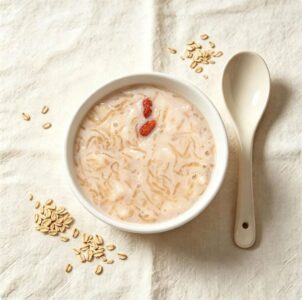
Bird Nest Rice Congee is the plain version: rice and bird’s nest, with nothing else competing for the spoon. It is the closest of the three to the older soup, except that the rice gives it a body the soup never had. You get the strands against a thin, glossy base, and the faint sweet note comes through because nothing stands in front of it.
Texture-wise it is the lightest of the three. It coats the spoon in a film rather than a layer, and it stays fluid while it is hot, which makes it easy to eat slowly without the bowl setting under you. It fits the start of a day, or a small bowl late in the evening when you want warmth rather than volume.
It is also the bowl to use as a reference. Eaten first, it makes the other two legible immediately: you can taste what added ingredients do to the same base, and you can tell whether the silk is coming from the rice, from the nest, or from something else entirely.
Five White Bird Nest Congee and Thick Coconut Bird Nest Congee Pull the Silk in Opposite Directions
If the plain bowl is the reference point, the next two are arguments about what to do with it, and they argue in opposite directions. One adds weight to the base, the other adds fat, and the nest reads differently depending on which way you go.
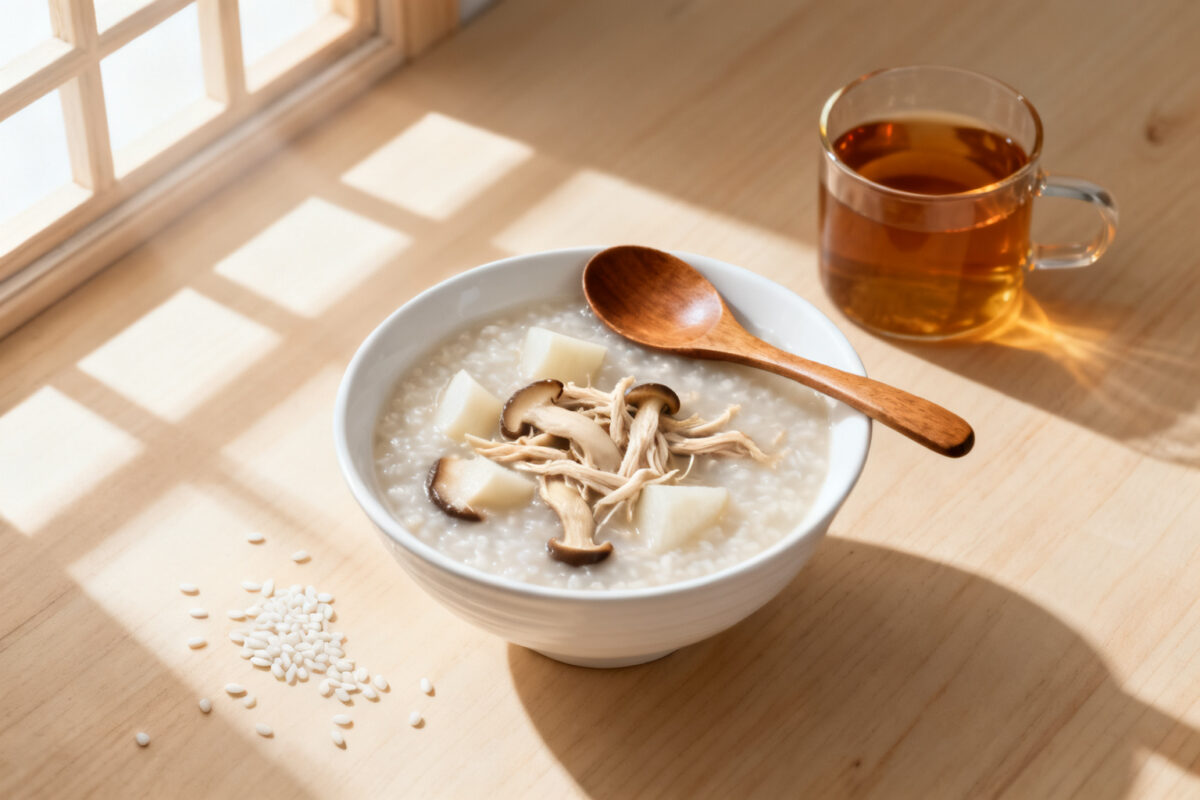
Five White Bird Nest Congee brings yam, lily bulb and poria into the rice, and the effect is weight. The bowl is fuller and slightly sticky, and it coats the spoon in a layer rather than a film. The silk is still there, but it arrives after the starch instead of before it, which makes it a morning bowl for most people: it sits longer and it does not ask to be eaten quickly.
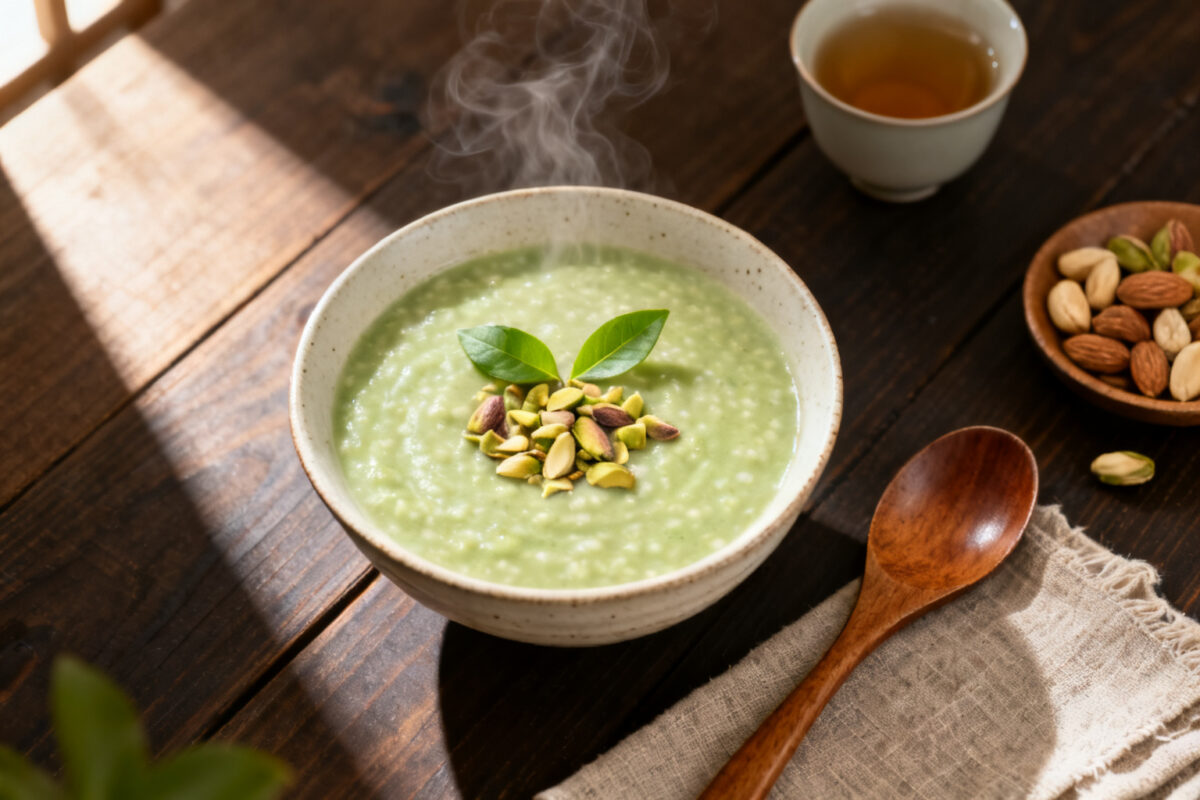
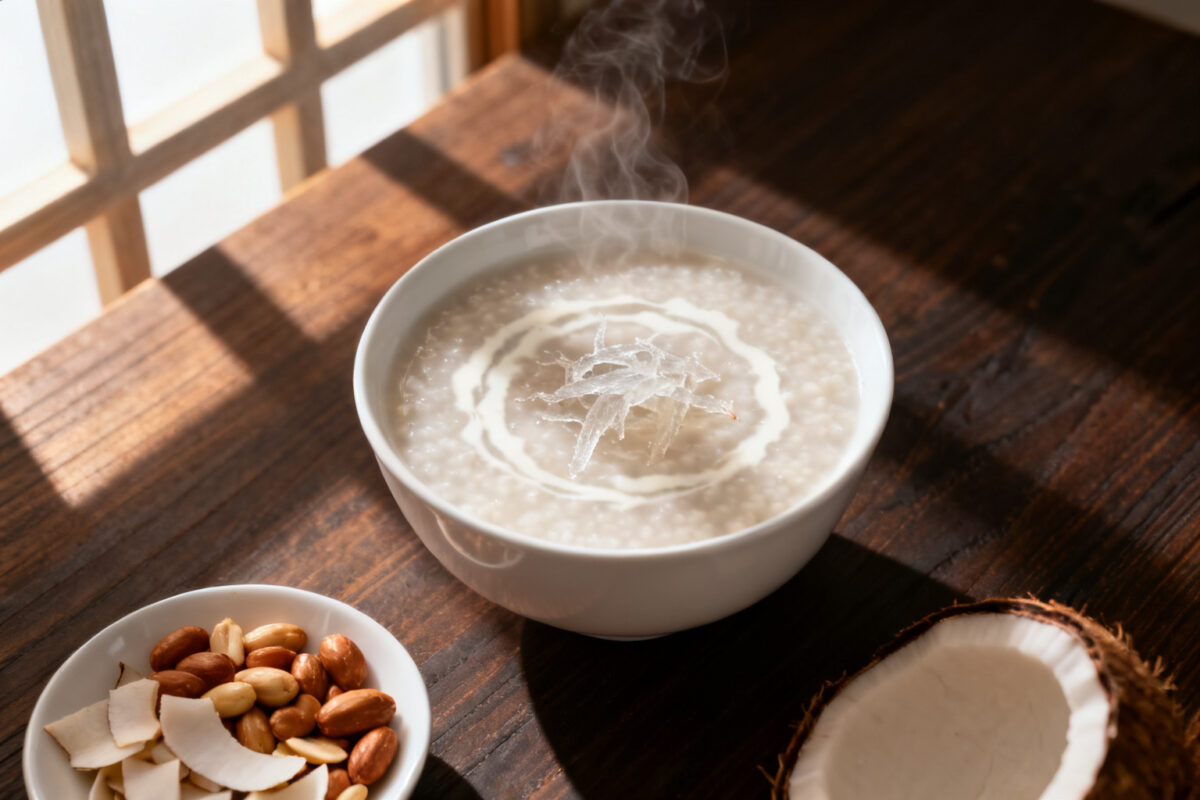
Thick Coconut Bird Nest Congee goes the other way. A coconut base with quinoa, oats and barley pushes the bowl toward cream, and those ancient grains leave a fine grainy edge that keeps it from turning smooth all the way through. It is heavier on the spoon than the plain bowl, but the weight comes from fat and grain rather than from starch.
Thick Coconut Bird Nest Congee reverses the order of sensation. You feel the fat first, then the grain, and the silk of the nest last, underneath everything else. That reads closer to a dessert than to a breakfast, which makes it a good late-afternoon bowl or an after-dinner one, served in a small dish rather than a mug.
Set side by side, the three are not variations on one theme so much as three positions on a single line, running from fluid to full to creamy. Choosing between them is less about quality than about which position you want at that hour, and the table below places them.
| Bowl | Base | How the Silk Reads | Serve It | Where It Fits |
|---|---|---|---|---|
| Bird Nest Rice Congee | Rice and bird's nest, nothing else competing | Thin and glossy, with the strands still separate and the spoon lightly filmed | Hot, as soon as it moves freely in the bowl | A slow start to the day, or a small warm bowl before bed |
| Five White Bird Nest Congee | Yam, lily bulb, poria and rice | Fuller and slower, coating the spoon in a layer and holding the strands in place | Hot, stirred once so the starch does not sit at the bottom | A morning when you want something that stays with you until lunch |
| Thick Coconut Bird Nest Congee | Coconut, quinoa, oats and barley | Creamy at the front and silky underneath, with a grainy edge running through it | Warm rather than scalding, in a small dish | Late afternoon or after dinner, when a dessert is what you actually want |
Reheating Is Where Most Bowls of Bird Nest Congee Lose Their Silk
Temperature is the last variable, and the one most often ignored. Warm, the starch gel is fluid and the strands move freely, which is when the bowl is at its silkiest. Very hot, the gel thins further and the steam carries off what little aroma there is. Cooled, the gel stiffens and the strands begin to clump.
That is why the directions on the package matter more than any general rule. Gentle, staged heating with a single stir is usually enough. A hard boil breaks the gel apart and, in the coconut bowl, can split the fat so the texture turns grainy. Reheat in short bursts rather than all at once, stirring between them, and stop as soon as the contents move as one when you tilt the bowl.
If a chilled bowl has set too firm, a spoonful or two of hot water stirred through will loosen it without shifting the balance much. Adding a lot of liquid at once is the mistake: the gel thins unevenly, and you end up with a watery top and a dense bottom. If it has gone the other way and turned thin, a minute more over low heat with the lid off brings it back together faster than more starch would.
The readiness test is visual. The surface should move as a single sheet when you tilt the bowl, and the spoon should come out coated but not loaded. If the congee clings in a lump, it is too tight; if it runs straight off, it is still soup.
The Bowl Stays Silky Only While You Are Still Eating It
Silk has a clock on it. The bowl is at its best in the first several minutes after it comes off the heat, while the gel is loose and the strands are still separate. Leave it sitting for twenty minutes and the starch begins to set back, the surface skins over, and the texture moves from silk toward pudding.
The practical response is pace and a smaller spoon. Stirring between bites is the thing to avoid: every stir breaks the gel and releases water, and by the bottom of the bowl you have a thin liquid and a clump of rice. Let the spoon fill, lift it straight up, and leave the rest of the bowl alone until the next mouthful.
A topping helps as long as it stays plain. Toasted nuts, a few puffed rice grains, or a spoonful of something cold and tart give the silk something to push against. Anything strongly flavoured, or anything that melts into the bowl, works against it, because the whole point of this texture is that it is quiet.
Eaten that way, bird nest congee behaves like a small dish rather than a large one. It fits a slow start to a morning, an afternoon when you want something warm and light, or the end of an evening when a full meal would be too much. The silk is the reason to eat it, and the silk does not survive being rushed.
One Thing to Remember
Silk in a bird nest bowl is a balance rather than an ingredient: the nest supplies slip, the rice supplies body, and the window between them is narrow. Heat, ratio and pace all move that window, which is why the same bowl can feel glossy at the first spoon and heavy at the last.
Frequently Asked Questions
Is bird nest congee the same as bird’s nest soup?
They share an ingredient but not a structure. The soup is a clear, lightly thickened liquid in which the nest is the only body. Congee adds rice starch, so the nest sits inside a thicker base and reads as texture rather than as the whole dish.
Does bird nest congee taste sweet or savoury?
Mild either way. The nest itself is close to neutral with a faint egg-white note, so the base decides: a rice bowl leans clean and lightly sweet, a coconut bowl leans dessert, and a bowl with yam and lily bulb sits between the two.
Why does the texture change when I reheat it?
Starch gel moves with heat. Warm, it is fluid and the strands slide. Overheated, it thins and the aroma leaves with the steam. Cooled, it stiffens and the strands clump. Gentle, staged heating keeps it closer to where it started.
What can I add without losing the silk?
Anything plain and crisp: toasted nuts, puffed rice, a spoonful of cold fruit. Strong flavours and anything that melts into the bowl cover the quiet note the nest contributes, which is most of what you are eating it for.
Which of the three bowls is the silkiest?
The plain rice one, because nothing competes with the strands. The five white bowl is fuller and slower, and the coconut bowl is creamy before it is silky. Silk is easiest to feel when the base is thinnest.
Try It Yourself
The bowls mentioned in this article, straight from our kitchen.
Bird Nest Rice Congee
View Product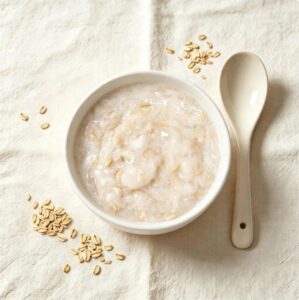
Five White Bird Nest Congee
View Product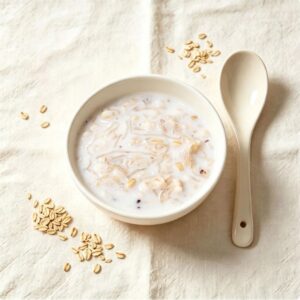
Thick Coconut Bird Nest Congee
View Product