
Wellness Chinese desserts

Guilinggao: The Herbal Jelly That Tastes Like Nothing Else

Guilinggao: The Herbal Jelly That Tastes Like Nothing Else
ZeaGrove Journal · Food & Wellness
zeagrove team · November 3, 2026 · 10 min read

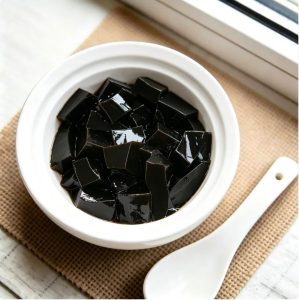
Guilinggao is a dark, glossy jelly that most non-Chinese eaters meet by accident: a black cube floating in syrup at a Cantonese dessert shop, or a small sealed cup in the chilled aisle of an Asian grocery. The first spoon does not behave like dessert. It is bitter before it is sweet, herbal rather than fruity, and the aftertaste sits closer to strong tea than to sugar.

That bitterness is not a fault in the recipe. It is the recipe, and everything else in a good bowl, the set, the temperature, the spoonful of syrup, exists to keep the bitterness readable instead of smothering it. Read guilinggao as a herbal jelly dessert built around a concentrated decoction and the cup stops tasting strange. It starts tasting specific, and one spoon is enough to tell a good one from a bad one.

The Bitterness Is the Point, Not a Flaw to Fix

Where the bitterness lands matters. In guilinggao it arrives at the front of the mouth, sharp and clean, the way a long, strong brew of roasted roots does, then fades into something earthier and faintly sweet at the back of the tongue. The aroma is dry and woody, the smell of a chinese herbal jelly that has been boiled down instead of diluted. Nothing in the cup is sour and nothing is bright. The whole flavour sits in a low, dark register.

That profile comes from the method rather than from a flavouring. Guilinggao is not a sweet jelly with herbs added to it. It is a herb decoction thickened until it holds its shape: roots and rhizomes simmered for hours, the liquid reduced, and the result poured while still warm. The bitterness is the most concentrated thing in that liquid, which is why it survives the sugar, the milk and the cold.

So the useful question is not whether the jelly is sweet enough, because it was never meant to be. The useful question is whether the bitterness is clean or muddy. A clean cup tastes of several things at once, bark and a little smoke and a cool sensation at the end. A muddy one tastes of starch with a vague vegetable sourness behind it, and no amount of syrup rescues it.

The Bitterness Has a Source, and It Is Written in the Name

Guilinggao is usually translated as turtle jelly, and the name is literal about the old formula: turtle plastron simmered with a group of dried roots, one of which, a Smilax rhizome, supplies the second half of the Chinese name. Wuzhou, in Guangxi, is the city most closely tied to that version. Much of what is sold today, especially in sealed cups, is built from the herbs alone.

What actually holds the jelly together is starch, not turtle. The hot herb liquid is thickened, traditionally with water chestnut starch or another fine starch, and sets as it cools into a soft, faintly sticky solid. That single detail predicts the texture: a starch set is tender, slightly grainy at the cut edge, and quick to soften at room temperature. It has none of the bounce of a gelatin dessert, and it is not supposed to.

If the turtle question matters to you, the ingredient list on the pack is the only reliable answer, because the name alone will not settle it. Some cups include it and some do not, and the label is where that difference gets stated.

A Good Set Breaks Like Soft Custard and Holds Its Edge on the Spoon

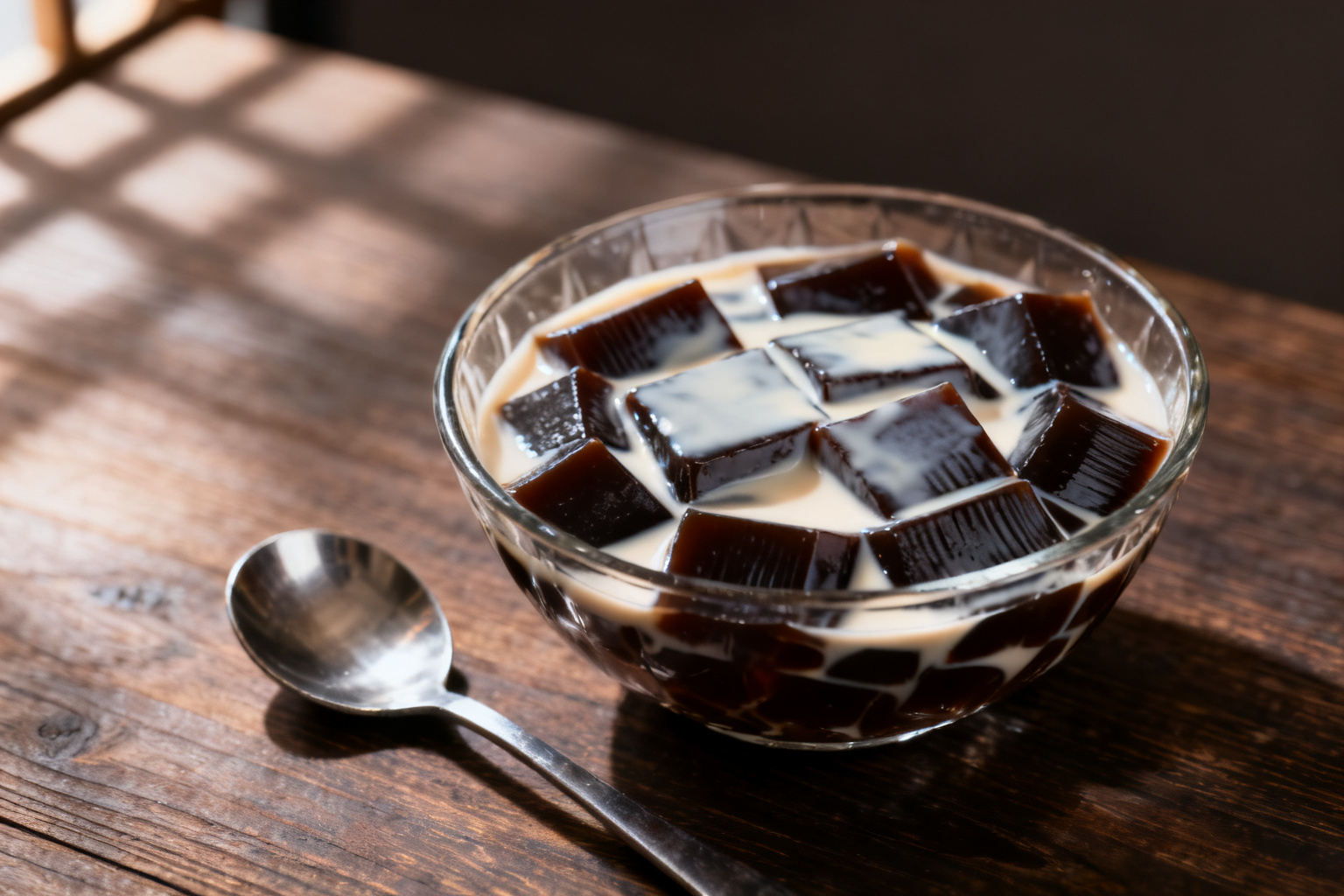
Texture is the first honest test of a cup, because it tells you how much starch went in. A good guilinggao cuts cleanly under the edge of a spoon, trembles as a single piece when you lift it, and then dissolves on the tongue instead of asking to be chewed. Soft enough to swallow without effort, firm enough that the cube does not collapse as it leaves the cup.

Two failures are common. Set too firm, the jelly turns pasty, coats the roof of the mouth and flattens the herbs into one starchy note. Set too loose, it slides into soup, which makes a decent drink and a poor dessert. Between the two, err on the soft side, since a jelly that barely holds is closer to the traditional texture than one that bounces.

This is where a ready-made cup does real work, because the set is already decided before you open it. The Herbal Turtle Jelly is chilled and spoonable, so the texture is fixed and the job left to you is small: cut it into cubes in the cup with the side of the spoon, which gives a topping more surface to sit on and keeps each bite from turning dense.

Chill It and the Herbal Notes Sharpen; Warm It and the Body Softens

Temperature changes less about the bitterness than people expect and more about everything around it. Straight from the fridge, chilled guilinggao reads sharp and clean, the aroma stays closed in, and the jelly cuts firmly under the spoon. A few minutes on the counter and the same cup turns softer and rounder, the herb smell opens, and the finish stretches longer. Neither is wrong. They are different desserts.

Warm guilinggao, as some shops serve it, sits closer to a thick herbal soup than to a jelly, and it suits a small bowl on a cold day. The cup is sold chilled, so it already sits at the temperature the dessert wants; open it when you want it and eat it while it still has an edge. If you want the softer reading, take it out a few minutes early rather than heating it, because heat collapses a starch set quickly.

There is a practical reason the cold version dominates beyond habit. Cold dulls sweetness, and this jelly has almost none to lose, so nothing is sacrificed by chilling it while the herbal top notes stay distinct. A sweeter dessert would suffer at that temperature. This one simply gets clearer.

The Topping Is a Dial, Not a Requirement

Once the cup is cold and set, the last variable is what goes on top. Almost every guilinggao comes with something sweet nearby: golden syrup, honey, evaporated milk, thick coconut milk. The common mistake is treating that as mandatory. A teaspoon stirred through the whole cup turns it into a mild, crowd-pleasing jelly and hides the thing you came for. A teaspoon poured over the top and left alone gives you two registers in one spoon, bitter underneath, sweet at the edge.

Evaporated milk behaves differently from syrup. It does not dissolve into the jelly so much as rest on it, adding a fatty, faintly cooked-milk layer that softens the finish without sweetening the middle. That is the version to reach for when you want the cup to eat like a dessert first. Honey is the quieter option, spreading slowly and leaving the aroma intact.

The table below is that decision compressed, written for one cup rather than for a bowl at a shop.

What Goes On TopHow Much for One CupWhat It ChangesChoose It When
Nothingnone, eaten plainkeeps the bitter front and the long finish exactly as setyou want to judge the herbs before dressing them
Golden syrupa teaspoon or two, poured on topsweetens the first bite and leaves the middle bitterit is your first cup and you want a way in
Evaporated milka thin spooned layer, about a tablespoonadds body and a cooked-milk note, rounds off the finishyou want it to eat like a dessert first
Honeyhalf a teaspoon, drizzled and leftsweetness that arrives slowly and does not swamp the aromathe cup is very cold and the smell feels shut in
Thick coconut milka tablespoon, poured over the cubesa cool, faintly sweet top layer that lifts the herb noteyou are serving it as a light ending to a rich meal

In Cantonese Sweet Shops, Bitter Sits Alongside Sweet

Dressed or not, the cup ends up doing the job it does in the food culture it comes from. A Cantonese dessert menu is not a wall of sugar. It alternates, and the sharper, more astringent bowls exist to be ordered after the richest part of a meal or on a night when everything else has been heavy. Guilinggao holds that slot. Its role at the table is contrast, which is why it often arrives last, cold, in a small portion, with the syrup on the side.

That also explains the size. This is not a bowl you finish for volume. It is a few spoonfuls that reset the mouth, and eaten that way the bitterness reads as refreshing rather than punishing, with the cold doing half the work. Anyone who has only had a large cup eaten slowly at room temperature has met a slower, flatter version of the same dessert.

At home, the closest thing to that rhythm is a small chilled cup after a heavy dinner, eaten in a few spoons rather than saved for later. It is a portion question, not a recipe question, and it is the easiest part of guilinggao to get right.

A Chilled Cup Removes the Simmering, Not the Flavour

None of this requires simmering roots at home. Making guilinggao from dried herbs takes hours of reducing and straining, plus a careful hand with the starch at the end, which is a weekend project rather than a weekday habit. It is also why the jelly moved into sealed cups. The long part is done before the cup is opened: the decoction is already boiled down and the set is already correct, which makes it a genuinely ready to eat dessert.

What the cup cannot decide is how you eat it. The bitterness still needs a temperature and a topping, and the texture still rewards a minute of attention with the spoon. Treated as a blank canvas it is a decent dessert. Treated as a bitter jelly that wants a thin layer of milk and a cold spoon, it is a better one.

So start plain, add a teaspoon of syrup or a spoon of evaporated milk on top, and store whatever is left the way the pack directs. The first cup tells you which dial you prefer. The second is the one you actually enjoy.

Other chilled, spoonable Chinese desserts sit in the same Chinese wellness desserts collection, but guilinggao is the one that explains the group: it is the clearest case of a dessert built on bitterness instead of sugar.

One Thing to Remember

Bitterness is the structure of this jelly, not an accident, so serve it cold, cut it small, and add syrup by the teaspoon. The set matters as much as the herbs: soft enough to dissolve, firm enough to hold an edge on the spoon.

Frequently Asked Questions

What does guilinggao taste like?

Bitter at the front, then earthy and faintly sweet, with a dry herbal aroma and a cool sensation at the end. The bitterness is clean rather than harsh, closer to a concentrated root tea than to fruit. Sweetness comes from the topping, not from the jelly.

Is turtle jelly really made with turtle?

Sometimes. The historical formula pairs turtle plastron with dried roots, and some producers still follow it. Many modern versions, especially ready-to-eat cups, use the herbs alone. The ingredient list on the pack is the only reliable answer.

Should guilinggao be eaten cold or warm?

Both exist, and they behave differently. Chilled guilinggao is firmer and sharper, and it is the form sold in cups. Warm versions are softer and closer to a herbal soup. For a first cup, cold with a small amount of syrup is the easier introduction.

How do you serve it from a cup?

Open it, cut the jelly into cubes with the side of a spoon, and put a teaspoon of syrup or a spoon of evaporated milk on top rather than stirring it through. Eat it cold, and follow the pack for storage and for how long an opened cup keeps.

Try It Yourself

The bowls mentioned in this article, straight from our kitchen.

Herbal Turtle Jelly

Herbal Turtle Jelly

View Product