
Blog
Instant Nutrition Congee for Breakfast, Diet & Gut Health | Low-Sugar, High-Protein Options

A bowl of congee is one of the few breakfasts that asks nothing of you except patience, and patience is exactly what most mornings do not have. The version worth keeping in the cupboard is the one that gets you the texture without the two hours of stirring: something you can heat in a pot or a mug and eat while it is still steaming. That is what instant nutrition congee is meant to be, and it is why the category has grown past the plain rice packet.
There is a catch, though. Most instant congee is thin, sweet and gone in four spoonfuls, which is a snack pretending to be a meal. A bowl that holds up as breakfast, as a lighter dinner, or as something gentle on a tired stomach has to be thicker, better seasoned and built from grains that actually satisfy. This piece covers which bowls do that, how to warm and top them so they taste like food rather than powder, and how to fit them into a week that already has too much in it.
Why a Warm Bowl Beats a Cold Bar at 7 A.M.
Most breakfast habits are built around speed, and speed usually means cold, dry and eaten standing up. A congee breakfast is still fast, but it lands differently: warm, soft, and slow enough to feel like a meal even when you eat it in six minutes. That difference is not sentimental. Something hot and savoury in the morning is easier to finish than a bar you chew out of obligation, and finishing breakfast is the whole point.
Texture is where instant congee earns or loses its place. A good bowl should coat the spoon, hold a slight grain when you press it, and stay thick as it cools instead of separating into water and silt. Glutinous rice is often what gives that body, and it is the reason a well-made packet can feel closer to home-cooked than to instant. If you have only had the thin, sweet kind sold in small cups, the thicker style is a different experience entirely.
The other thing warmth does is buy you time. Pouring, stirring and waiting ninety seconds is a natural pause, and that pause is often the only quiet moment before messages start arriving. People who say they do not have time for breakfast usually mean they do not have time to sit down and think. A bowl you can hold in one hand does not require either.
What to Look For on the Packet
The label tells you most of what the bowl will taste like. Short ingredient lists read better than long ones, and the grain should be named first rather than sugar or a starch thickener. If the first three ingredients are grains, water and a real food like pumpkin or soy, you are probably holding something that will taste of itself. If they are maltodextrin and flavourings, you are holding a sweet drink with texture.
Low sugar matters more in congee than in most foods, because congee is soft and easy to eat quickly, which means a sweet bowl disappears before your body registers it. A bowl with little or no added sugar lets the grain and any added ingredient do the talking, and it leaves room for you to decide how sweet the finished bowl should be. A spoon of osmanthus or a few raisins at the end gives you more control than a packet that arrives pre-sweetened.
Protein is the other number worth a glance, especially if the bowl is standing in for a whole meal. Plant sources like soy and coconut, or egg and nut toppings you add yourself, keep a bowl from being pure carbohydrate. That is not a health claim, it is simple arithmetic: a bowl with some protein in it keeps you away from the biscuit tin at eleven.
Three Bowls, Three Different Mornings
The first is the one to reach for when you want the recognisable thing, the bowl that tastes like the congee you had as a child or the one you had on a trip and still think about. Bird Nest and Rice Congee is built on that idea: rice cooked down until it collapses, a clean savoury base, and a texture that stays thick in the bowl. It is plain in the best sense, which means it takes toppings well. A little shredded ginger, a few drops of sesame oil, or a scatter of spring onion turns it into something you would serve to someone else.
If the plain rice bowl feels too austere for you, the plant-based one moves in a creamier direction without losing the grain. Soy Coconut Bird Nest Congee brings soy and coconut into the base, so the bowl arrives rounder and slightly nutty, with a soft sweetness that comes from the ingredients rather than from added sugar. It suits people who find plain congee a bit blank, and it holds up as a small evening meal when you want something warm but not heavy before bed.
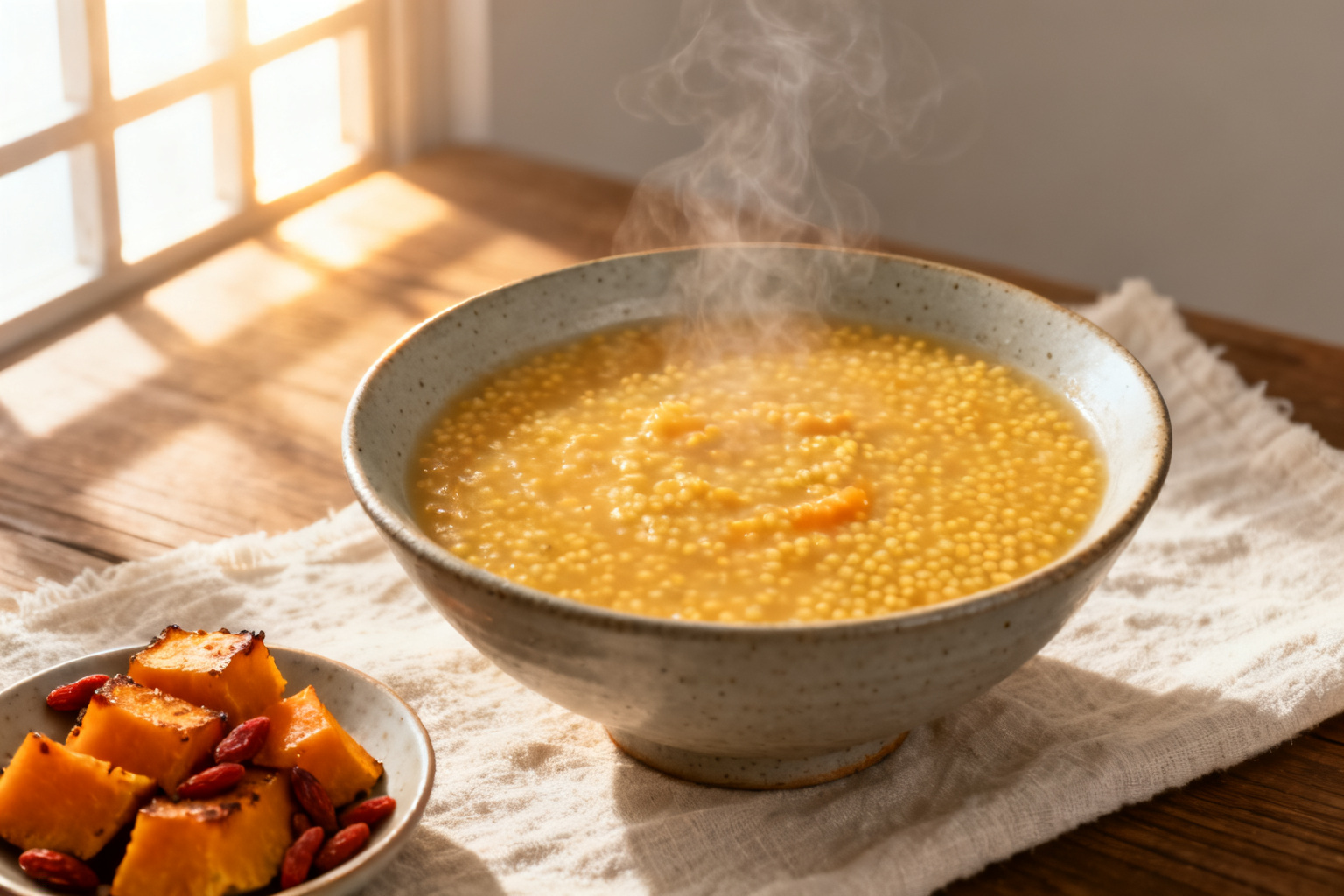
Then there is the bowl for the household that cannot agree on anything, the one that has to work for a child, a grandparent and a hurried adult at the same table. Millet and Pumpkin Porridge is mild, naturally sweet from the pumpkin, and soft enough that nobody has to work at it. Millet brings a faintly toasted note that keeps the bowl from tasting flat, and the colour alone makes it look like someone cooked.
| The Morning You Are Having | Which Bowl to Open | What to Add at the End | How Long It Takes |
|---|---|---|---|
| You want the familiar taste and nothing clever | Bird Nest and Rice Congee | Ginger slivers and a drop of sesame oil | About five minutes from cupboard to spoon |
| You want something creamier and slightly sweet | Soy Coconut Bird Nest Congee | Toasted coconut flakes or a few raisins | About five minutes, one stir halfway |
| You are feeding several people with different tastes | Millet and Pumpkin Porridge | Nothing, or a little salt for the adults | About six minutes, longer if you thicken it |
| You are eating late and want it light | Soy Coconut Bird Nest Congee | A spoon of crushed nuts for crunch | Five minutes, eat it slower than usual |
Warming It So It Tastes Cooked, Not Reconstituted
The single biggest difference between a bowl you enjoy and one you tolerate is how you bring it back to heat. The stovetop is still the best tool: a small pot, low flame, and a wooden spoon moving slowly for three or four minutes. Stirring in one direction and scraping the bottom keeps the grain from catching, and it builds the thickness back up evenly instead of leaving a lump in the middle.
If you are using a microwave, go in short bursts and stir between them. Thirty seconds, stir, thirty seconds, stir. The bowl heats from the outside in, so an unstirred minute leaves a cool centre and an overcooked rim. Add a splash of hot water rather than cold if it looks tight, because cold water drops the temperature and makes the grain seize.
Here is a small thing learned the slow way: let the bowl stand for a minute off the heat before you eat it. Congee continues to thicken as it settles, and that minute is when it goes from soupy to spoon-coating. It also stops you burning your tongue on the first mouthful, which is a real risk with anything this soft.
Breakfast, Lighter Dinner, and the Late-Night Gap
Breakfast is the obvious slot, and the one most people already have in mind. What makes it work is that congee does not demand appetite. On mornings when a plate of eggs feels like too much, a warm bowl still goes down, and you leave the house having actually eaten. Pair it with something with a bit of bite, half a boiled egg, a few salted nuts, a slice of fruit, and it carries you to lunch.
As an evening meal it works best when you are not looking for dinner so much as a soft landing. After a late shift, a long flight, or a day of eating badly, a bowl of congee is food you can face when nothing else appeals. The millet and pumpkin bowl is particularly good here, mild enough to eat at ten at night without feeling like you have made a mistake.
The late-night version needs a warning about portion, because congee is soft and it is easy to eat twice as much as you meant to. One bowl, eaten slowly, is usually enough. If you know you will want more, add a topping with substance rather than opening a second packet: a spoon of peanut butter stirred through the soy coconut bowl turns it into something that genuinely holds you until morning.
Toppings That Make It a Meal
Plain congee is a canvas, and the toppings are where a bowl becomes yours. On the savoury side, think about three things: something salty, something with texture, something fresh. Pickled cucumber, a few drops of soy, shredded spring onion and a scattering of crushed peanuts cover all three in under a minute. A soft-boiled egg on top makes it a full meal and takes six minutes in a small pan while the congee warms.
For the soy coconut bowl, sweet toppings work better than salty ones. Toasted coconut, sliced banana, a spoon of black sesame paste, or a few raisins plumped in hot water. Keep the additions small, because the base is already creamy and piling on more sweetness flattens it. A pinch of salt, oddly, makes the coconut taste more like coconut.
The pumpkin bowl is the most forgiving of the three and the one children tend to accept without negotiation. A little butter or olive oil stirred in at the end adds richness, and a grind of black pepper keeps it from tasting like baby food. If you want it sweeter, roast a few cubes of pumpkin while you are doing something else and drop them in cold, so they warm through in the bowl and give you something to chew.
Making It Work in a Week That Has No Room
The habit that sticks is the one with the fewest steps, so remove the steps. Keep the packets where you make tea, not in a cupboard behind the pans, and keep a small pot on the hob rather than in a drawer. If your default is the microwave, leave a mug that fits the bowl beside it. Friction is what kills breakfast routines, not motivation.
Two or three bowls a week is a realistic rhythm, and it is enough to notice the difference in how your mornings feel. People who eat it daily tend to be the ones who already liked congee before they bought anything. Everyone else does better treating it as the answer to specific moments: the rushed Tuesday, the night you land late, the Sunday when nobody wants to cook.
One honest note about expectations. Instant congee is not going to taste like a bowl from a restaurant that simmered stock for hours, and it is not meant to. What it does is deliver a warm, thick, savoury bowl in the time it takes to boil a kettle, on the mornings when the alternative is nothing at all. That trade is worth making more often than not, and it is a good deal easier to repeat than a two-hour recipe.
For anyone building a small shelf of these, the nutritious porridge collection is the place to see the range together. Start with one bowl that matches how you actually eat in the morning, not the one that sounds most impressive on paper, and add a second once you know how you like it topped.
A Note on Soups, Supplements and What This Is
Congee is food. It is a grain dish, cooked soft and eaten warm, and it has been breakfast in large parts of Asia for a very long time. It is not a supplement, not a powder to mix for a result, and not a replacement for anything a doctor would give you. If you are pregnant, feeding a young child, or managing a condition that shapes what you eat, ask a doctor once and then stop worrying about it.
What you can reasonably expect is simpler than any claim: a warm bowl, a texture that holds, and a breakfast you actually finish. That is the whole offer, and it is enough. Anyone selling you a bowl of rice porridge as a cure is selling something else.
FAQ
Is instant congee actually a real meal, or just a snack?
It can be a real meal if you treat it like one. The bowl itself is soft grain and liquid, so add one thing with substance, such as a soft-boiled egg, a spoon of nuts, or a handful of edamame. With a topping, a single bowl holds most adults until lunch. Without one, it behaves more like a warm snack and you will be hungry by ten.
How hot should I eat it, and can I make it in advance?
Eat it as soon as it is cool enough not to burn you, somewhere around the temperature of a hot drink you can sip. It thickens quickly as it cools, so a bowl left standing for ten minutes needs a splash of hot water and a stir. You can make it ahead and refrigerate it, then loosen it with water on the hob, but the texture is best fresh.
Can I have this for breakfast every day?
You can, and plenty of people do, but variety matters more than frequency. Two or three bowls a week suits most households better than a daily habit, because the toppings are where the interest comes from. Rotate between the plain rice bowl, the soy coconut one and the millet and pumpkin one so the soft texture does not become monotonous.
How is this different from takeaway congee or a pot I make myself?
Takeaway congee is better than this on texture and usually saltier, and it comes with a twenty-minute wait and a plastic lid. Making it yourself gives you the best bowl and costs you two hours of stirring. The instant version sits in the middle: a few minutes, no waiting, and a bowl thick enough to eat with a spoon rather than a straw.
What does bird nest congee actually contain?
It is a rice congee with bird nest added, cooked until the rice breaks down and the bowl turns thick and slightly glossy. The bird nest gives it a soft, faintly gelatinous texture rather than a strong taste of its own, which is why the bowl reads as savoury and clean. Think of it as a rice dish with an added ingredient, not as a therapeutic preparation.