

Blog
Black Chicken Broth: Why Chinese Cooks Prize the Dark Bird

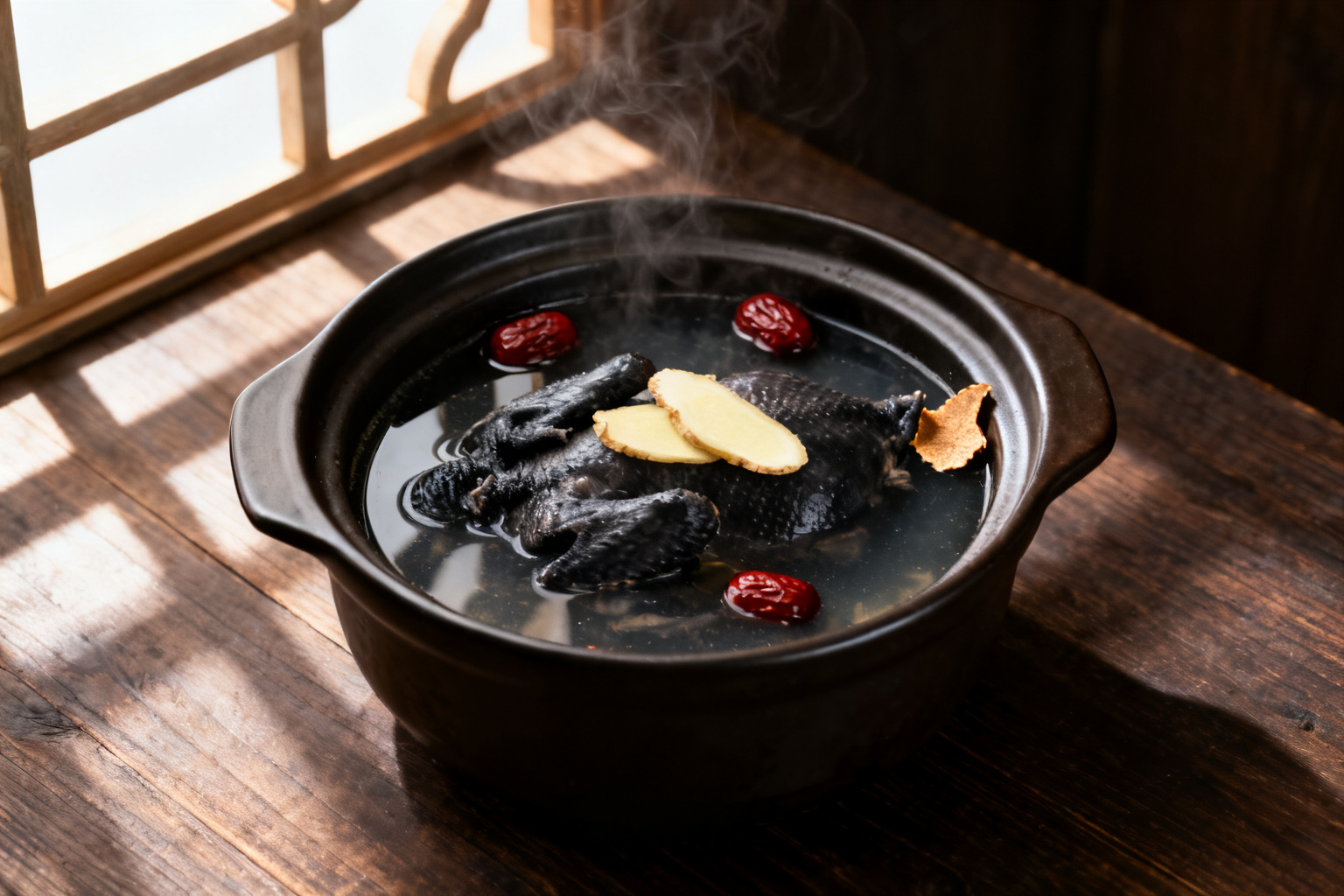
Black chicken soup is not a rare dish in China. It is what someone puts on the stove when the person they care about has had a long month. The bird looks wrong the first time you see it, with blue-black skin, dark bones and a body a third the size of a supermarket chicken. That oddness is exactly why cooks pay more for it, and why a pot made with it tastes unlike anything cooked from white poultry.
What follows is a working guide rather than a history lesson. It covers what the dark bird is, why it earns its place in the pot, and how a bowl of it behaves at a weeknight table and at a family lunch. There is also the practical part most recipes skip: how to reheat soup so the second serving keeps the aroma that made the first one worth the trouble. None of it needs special equipment, and none of it is difficult.
In This Article
What Is Black Chicken Soup, and Why the Dark Bird Earns Its Place
The short answer to what is black chicken soup is this: a clear broth built on the silkie breed, simmered slowly with ginger and a small handful of dried things, then served as the opening or the centre of a meal. The silkie is smaller and leaner than a commercial chicken, and the meat stays firm after a long cook instead of falling into threads. That is the whole reason cooks pay more for the dark bird.
You will see it sold whole, sometimes split, usually small enough to fit a two-litre pot. The meat is dark, the bones darker, and the fat gathers in a thin layer you can lift off with a spoon. People who grew up with it describe the taste as sweeter and more mineral than ordinary chicken, which is fair, though nobody can point to one compound that explains it. What is easier to describe is the texture.
Where the dish sits in the wider repertoire matters too. It is a Chinese herbal soup in the plain sense of the phrase: a broth with a few dried ingredients chosen for flavour and warmth, not a prescription for anything. Families disagree about what belongs in the pot, and those disagreements are the interesting part. Ask four cooks and you will get four lists, all of them defensible.
What the Long Simmer Is Actually Protecting
Two hours on low heat does three things. It pulls the savoury depth out of the bones, it softens the connective tissue so the meat gives without crumbling, and it lets the dried ingredients open. Stop at forty minutes and you still have soup. What you lose is the character of a long simmer, that faint stickiness on the lips and the smell that reaches the next room.
The ingredient that surprises people most is aged tangerine peel. It is exactly what it sounds like: citrus peel dried, then left to sit for years until the sharpness turns into something closer to dried apricot and old wood. A piece the size of a coin is enough for a small pot. Add it in the last twenty minutes, and scrape the white pith off first if the peel is thick, or the broth will turn bitter.
Dried reishi mushroom works on the same logic from the other direction. It is woody and faintly bitter, and it gives a brown depth that no amount of ginger can. It needs time and thin slices. Anyone making reishi mushroom soup at home should taste the liquid every half hour, because the moment the bitterness stops being pleasant is the moment to lift the slices out.
Recipes disagree about the peel, and the gap between adding it early and adding it late is smaller than most cooks admit. Thickness matters more than timing. Thin peel is gentle and easy to overdo, thick peel can take over a whole pot, and older peel behaves differently again. Taste at the end rather than trusting the clock.
How a Bowl Slots Into an Ordinary Week
The honest obstacle to an easy herbal soup for weeknights is not the shopping. It is that the good version takes two hours, and most people arrive home with about forty minutes of patience. The workaround is to treat the broth as something you finish rather than something you start. Simmer a base on Sunday, cool it, and keep it for the days when cooking is not going to happen.
As a herbal soup for dinner, the bowl works best with something plain beside it. Steamed rice, greens with garlic, a cold cucumber dish. The broth carries the most flavour, so it does not need competition on the plate. Two people can share one pot with rice and come away feeling they had a real dinner rather than a snack eaten standing at the counter.
Warm weather is where people get this wrong. A light soup for warm days is still served hot, but it should be thin, clear and small. A cup each at the start of a meal is more refreshing than a heavy bowl in the middle of the afternoon. Chill it and the fat sets on top, which tells you how much of it was there.
Then there is the second serving, where most of the flavour goes. On how to reheat soup: bring it up slowly, stop before it boils hard, and warm only what you plan to eat. A rolling boil clouds a clear broth and pushes the aroma into the kitchen, where nobody can eat it.
How It Sits Beside Takeout, Pork Bone Soup, and Your Own Pot
The nearest comparison is pork bone soup, which is heavier and whiter and takes even longer to get right. Bones need a rolling boil to give up that milky colour, and the result coats the mouth in a way the dark bird never does. Winter suits it. On a warm evening it can feel like a coat you cannot take off.
An ordinary chicken herbal soup is the everyday version: faster, cheaper, lighter, and perfectly good on a Tuesday. What it lacks is the density the silkie brings, that extra weight in the mouth that makes a small bowl feel like enough. Both are worth cooking, and the choice is usually about how much time you have rather than which one is better.
Takeout is the third option and the least predictable. Soup travels badly, and by the time it reaches the door the aroma has gone into the lid. Cooking it yourself is still the best version of the dish. It is also two hours you probably do not have on the day you want it, which is why the rest of the herbal soup range is built around that gap.
For the Evening That Ran Out of Hours
That gap, between wanting the bowl and having the time, is the reason this one exists. Black Chicken Soup with Donkey Hide Gelatin arrives as a finished broth in its own bowl: dark, clean, with the gelatin melted through so the liquid has a little body and a faint sweetness at the back. Warm it as the pack directs and you get what a long cook would have made, without the pot to wash.
The donkey hide gelatin is the part people ask about. It is a traditional ingredient, sold as dark amber sheets, and in a broth it does two things: it thickens the liquid slightly as it cools, and it rounds off the sharp edge of the ginger. It is there for texture and for the faint savoury note it carries. You will not see it once it has melted in.
The bowl does the work. The base holds a small warmer, and the design is our own, so the soup heats in place instead of in a saucepan. Follow the directions printed on the pack rather than guessing at it, and give it a moment before you open the lid, since the steam is hotter than it looks.
It fits more occasions than people expect, and most of them are not special ones. The table below is roughly how a week uses it, from the night nothing went to plan to a Sunday lunch with four people at the table.
| The Moment | On the Side | Who It Suits | What It Stands In For | Why It Works |
|---|---|---|---|---|
| Nine on a work night | Steamed rice and a handful of greens | The person who got in last | A delivery that arrives lukewarm | Nothing needs chopping and the bowl is already the right size |
| A hot afternoon when nobody wants to cook | Cold cucumber with vinegar, or nothing | Anyone who says they are not hungry | A heavy stew left on the stove | Thin and clear, so it reads as refreshment rather than weight |
| Sunday lunch with family | Noodles and a small dish of pickles | The people who followed the smell in | A restaurant lunch with a queue | One pot stretches across four bowls without thinning |
| After a late shift | A spoon of rice, or plain | Whoever has been awake since morning | Instant noodles at eleven | It is warm and salty and asks for no decisions |
| A first try at Chinese soup | Rice and steamed fish | Someone tasting the bird for the first time | An unfamiliar dish ordered by mistake | The flavour is clean and the ginger is familiar |
Serve it once and the second time gets easier, because you stop treating it as an occasion and start treating it as dinner. That is the shift worth making. The dark bird is prized because it rewards patience, and a good bowl should not ask for more patience than an ordinary evening has to give.
One Thing to Remember
The reason cooks pay more for a dark bird is not rarity. It is that the meat holds up through a long simmer without going dry, so the broth keeps a clean, deep flavour instead of turning flat.
Frequently Asked Questions
Why does the dark bird cost more than a regular chicken?
A silkie is smaller, slower to raise and yields less meat, so the cost per bowl is higher before anything else happens. What you pay for is the two hours of simmering and meat that stays firm in the pot. Set against a week of takeout, the arithmetic is not frightening, and the bowl needs nothing else beside it.
What should I serve with it, and how hot?
Serve it hot, in the bowl it comes in, with rice or noodles alongside and something green on the table. Taste before you add salt, because the broth has had time to season itself. If you want it as a starter, pour half into small cups and keep the rest covered so it stays warm.
Can it work as a weeknight dinner?
Yes, and that is the main reason to keep one in the cupboard. A bowl, rice and a plate of greens take about as long as waiting for a delivery, and the washing up is one bowl. It suits the night you walk in at nine and cannot face a shop.
How does it differ from pork bone soup or a plain chicken soup?
Pork bone soup is heavier, whiter and needs a hard boil to get there. A plain chicken soup is lighter and quicker. The dark bird sits between them: cleaner than pork bone, deeper than an ordinary chicken, and firm enough that the meat is still worth eating once the broth is gone.
Can I reheat a second serving?
Yes, but slowly. Warm only the amount you plan to eat, keep the heat low, and stop before a hard boil. A second warming is fine and a third is not, because the meat keeps giving and the broth starts to taste tired. Store whatever is left as the pack directs.
Try It Yourself
The bowls mentioned in this article, straight from our kitchen.
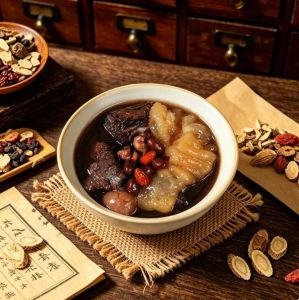
Black Chicken Soup with Donkey Hide Gelatin
View Product