

Blog
What Is Peach Gum? Inside the Chewy Dessert Bowls

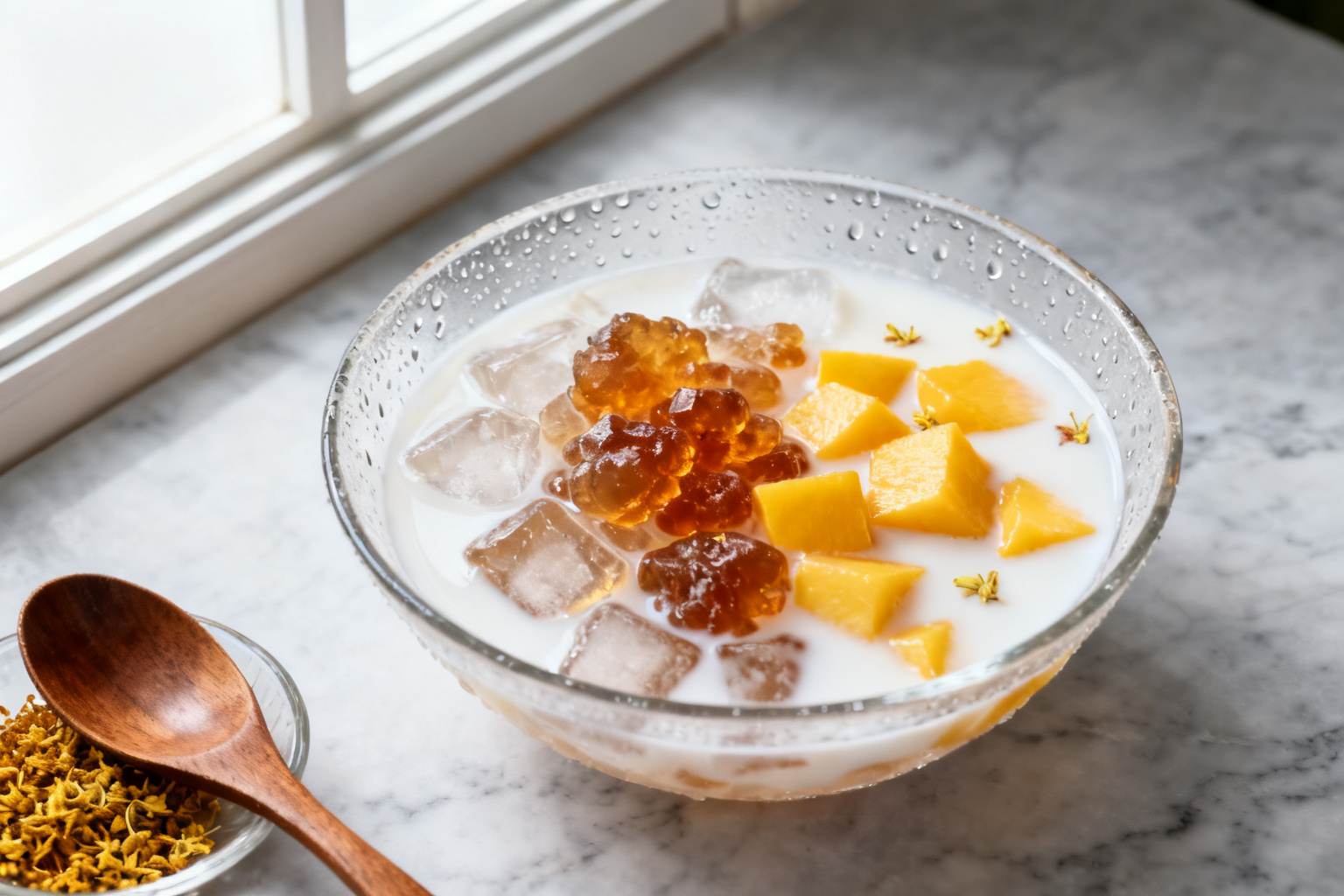
Peach gum arrives in a bowl looking like broken glass and leaves the spoon with a soft bounce. It is the chewiest thing in the Chinese dessert cupboard, and unlike jelly it does not dissolve on the tongue. What it does instead is hold its shape, take on whatever liquid it sits in, and give a small, persistent resistance that makes a bowl of sweet soup feel like something to eat rather than something to drink.
The bowl most people meet first is a peach gum dessert built on coconut milk or rock sugar syrup, chilled hard, and finished with mango, longan, or a pinch of dried osmanthus. It turns up on dessert menus in Cantonese restaurants and in the fridge of anyone who has learned to soak the dried resin the night before. This piece is about that bowl: what the ingredient actually is, where it sits next to the other Chinese sweet soups, and how to get the texture right at home.
Most of the difficulty is in the soaking and most of the pleasure is in the temperature. Get those two things right and the rest is assembly: a liquid, a little sweetness, something cold, and something soft to set against the chew. Everything below follows from that, including the parts that are easier to buy than to make yourself.
In This Article
The Short Answer to What Peach Gum Is
The short answer to what is peach gum is that it is a resin, not a fruit, not a seed, and not a setting powder. It seeps from the bark of a peach tree where the wood has been cut or damaged, hardens in the air, and is collected, dried, and sold as irregular amber shards. Nothing about it is new or invented; it has been eaten in Chinese kitchens for a long time, usually in sweet soups rather than in savoury dishes.
Dried pieces look like cloudy candy and feel like hard plastic. Soaking is what changes them. In cold water they swell over several hours, lose the cloudiness, and turn into something closer to clear jelly with a faint tan edge. Thin pale shards soften faster than thick dark lumps, and no single soaking time covers every bag, which is the first thing worth accepting about the ingredient.
The tree resin brings almost no flavor of its own. What it contributes is texture: a soft snap at the start of a bite, then a slow give as it yields. That is why it is nearly always paired with something that carries flavor, coconut milk, rock sugar syrup, mango, or ginger, and why a bowl should not be judged on sweetness alone. The pieces are there to be felt as much as tasted.
When a Bowl of Sweet Soup Earns Its Place
A Chinese sweet soup is a different category from a Western pudding. It is liquid first and sweet second, eaten as a pause rather than as a finish, and in Cantonese hands there is a whole case of it: black sesame, papaya with snow fungus, red bean, almond. A good Cantonese dessert shop keeps a dozen pots going at once. Peach gum fits that line up because it gives a thin liquid something to hold on to.
The bowl is at its best when the weather is against you. A chilled Chinese dessert for summer makes more sense than a baked one: cold coconut milk, cold syrup, cold fruit, and the resin firming up in the fridge rather than softening in a pot. Make it in the evening, leave it overnight, and it is ready before the day turns hot. In winter the same bowl can be served warm, thinner and gentler, with ginger in the syrup.
It is also the rare dessert that ends a late dinner without weighing the table down. Small bowls, a spoon each, nothing to slice or portion. That is roughly how it is eaten in the shops, and it is how it works best at home: put the bowl down, let people take what they want, and leave the rest in the fridge for tomorrow.
| Occasion | What to Serve Alongside | Why It Fits |
|---|---|---|
| A hot afternoon | Crushed ice and a cold spoon | Cold keeps the pieces firm and the syrup thin |
| The end of a long dinner | Small bowls, nothing else | A light close to a meal that has already run long |
| A table of several people | Mango, longan, a pot of tea | One large bowl and everyone serves themselves |
| A night in, on your own | Whatever fruit is in the fridge | Assembly takes minutes and there is one bowl to wash |
Where It Sits Next to Other Bowls
Put a peach gum bowl beside the rest of the shelf and the difference is immediate. Mung bean soup is earthy and slightly grainy, cooled with sugar and sometimes coconut milk. Double skin milk is set and custardy, with a thin skin on top that people argue over. Each of those is a flavor first and a texture second, which is the reverse of this one.
Then there is the bitter end of the case. Herbal jelly, sold as guilinggao in Cantonese shops, is dark, faintly medicinal, and served with syrup to soften it. Osmanthus jelly goes the other way entirely: clear, floral, almost weightless, and gone in three spoons. Peach gum sits between the two, with more chew than either and none of the bitterness that guilinggao carries.
What it does not have is a strong taste of its own, and that is the trade. People who love herbal jelly love it for the flavor. People who love this one love it for the bite and for the way it takes on coconut, mango, or syrup. Reach for the bitter bowl when you want to be argued with, and this one when you want the liquid and the fruit to do the talking.
Making One at Home, or Letting Someone Else Soak the Resin
An easy Chinese dessert at home usually means one of two things: a bowl assembled from cold parts, or a pot you stand over. This one belongs to the first kind, with one catch. The soaking takes hours even though the work is minutes, so the honest way to plan it is to start the night before and forget about it until morning.
After that the sequence is simple. Soak the shards until they lose their hard center, rinse them under cold water, and lift out any dark specks with the tip of a knife. Simmer them briefly in rock sugar syrup if you want a warm version, or skip the pot and fold them into cold coconut milk. Then chill everything together for a few hours so the pieces take on the sweetness around them.
Whether a bowl sets firm or stays loose is not something anyone can promise from a recipe. It depends on how long the pieces soaked, how thick they were, and how cold the fridge runs. Both versions eat well. The softer one drinks more like a soup, the firmer one more like a jelly, and neither is the wrong result.
Two Bowls Built on the Same Resin
The first of the two is a Coconut Mango Peach Gum Sweet Soup, which keeps the shape of a proper sweet soup: a cold coconut base, mango cut into chunks, and the resin spread through it rather than sunk at the bottom. Eaten straight from the fridge, the fruit gives a little acid against the syrup and the pieces stay firm enough to feel like the reason for the bowl rather than a garnish.
This is the summer version, and it suits a table where several people are sharing: one large bowl, smaller bowls to ladle into, nothing that needs plating in the kitchen. It also works as a single serving on a hot afternoon when nothing baked appeals. Keep it cold, because the whole point is the contrast between cold liquid and a piece that still has some resistance.
If the mango version reads as too bright, the plainer one goes the other way. The Coconut Milk Peach Gum Dessert drops the fruit and keeps the coconut, so the milk and the resin carry the bowl between them. It is the one to reach for when you want the chew without the acid, and it takes a spoonful of stewed pear or a scatter of toasted sesame on top without any argument.
Both are the same idea in two directions, and neither needs anything added to be finished. A cold bowl, a spoon, and maybe a few extra cubes of fruit is the whole assembly. More of the range sits on the Chinese desserts page if you want to see how the rest of the shelf looks beside these two.
One Thing to Remember
Peach gum is worth seeking out for texture rather than novelty: the pieces should stay clear-edged and springy in a cold syrup, and a bowl that keeps that bite instead of turning soft and uniform is the one worth ordering again.
Frequently Asked Questions
Why does a bowl of peach gum cost more than a bowl of jelly?
The ingredient sets the price, not the liquid. The resin is collected by hand from damaged bark, dried, and sorted by size and by how clean the pieces are, and a good share of the cost sits in the hours of soaking before any of it reaches a bowl. Jelly is powder and water. This is a slow ingredient with a short harvest.
Should it be eaten cold or warm?
Cold is the usual way, and colder is firmer: the pieces hold their shape and give a cleaner snap against the coconut milk. Warm, folded into ginger or rock sugar syrup, softens them into something closer to a slurp. Try one small bowl each way before you decide, because the same resin reads as two different desserts.
Can it work as breakfast or a late-night bowl?
Yes, in a small bowl, and for the same reason it works after dinner: nothing has to be cooked at the last minute. In the morning it is a cold, light start with fruit on top. Late at night it sits more gently than a heavy pudding. Keep the portion modest and add something else alongside if you are properly hungry.
How is the texture different from mung bean soup or double skin milk?
Those two are built on flavor: one tastes of beans and sugar, the other of milk and a caramelised skin. Peach gum has almost no taste of its own, so the bowl is built on texture and on whatever liquid surrounds it. That is why it is served with coconut, mango, or syrup rather than on its own.
How long do the pieces need in water?
Long enough to lose the hard white center, which is the only test that matters. Thin shards get there in a few hours, thicker lumps take most of a day, and the bag will not tell you which you have. Change the water once if it looks cloudy, keep the pieces covered so they swell evenly, and rinse before using them.
Try It Yourself
The bowls mentioned in this article, straight from our kitchen.
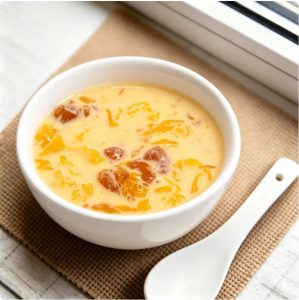
Coconut Mango Peach Gum Sweet Soup
View Product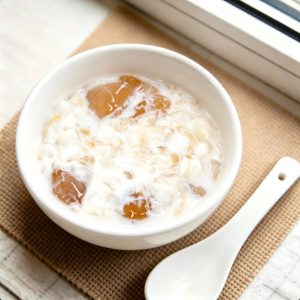
Coconut Milk Peach Gum Dessert
View Product