

Blog
Need a 2-minute quick breakfast? Our ready-to-eat meal replacement porridge is your perfect pick.

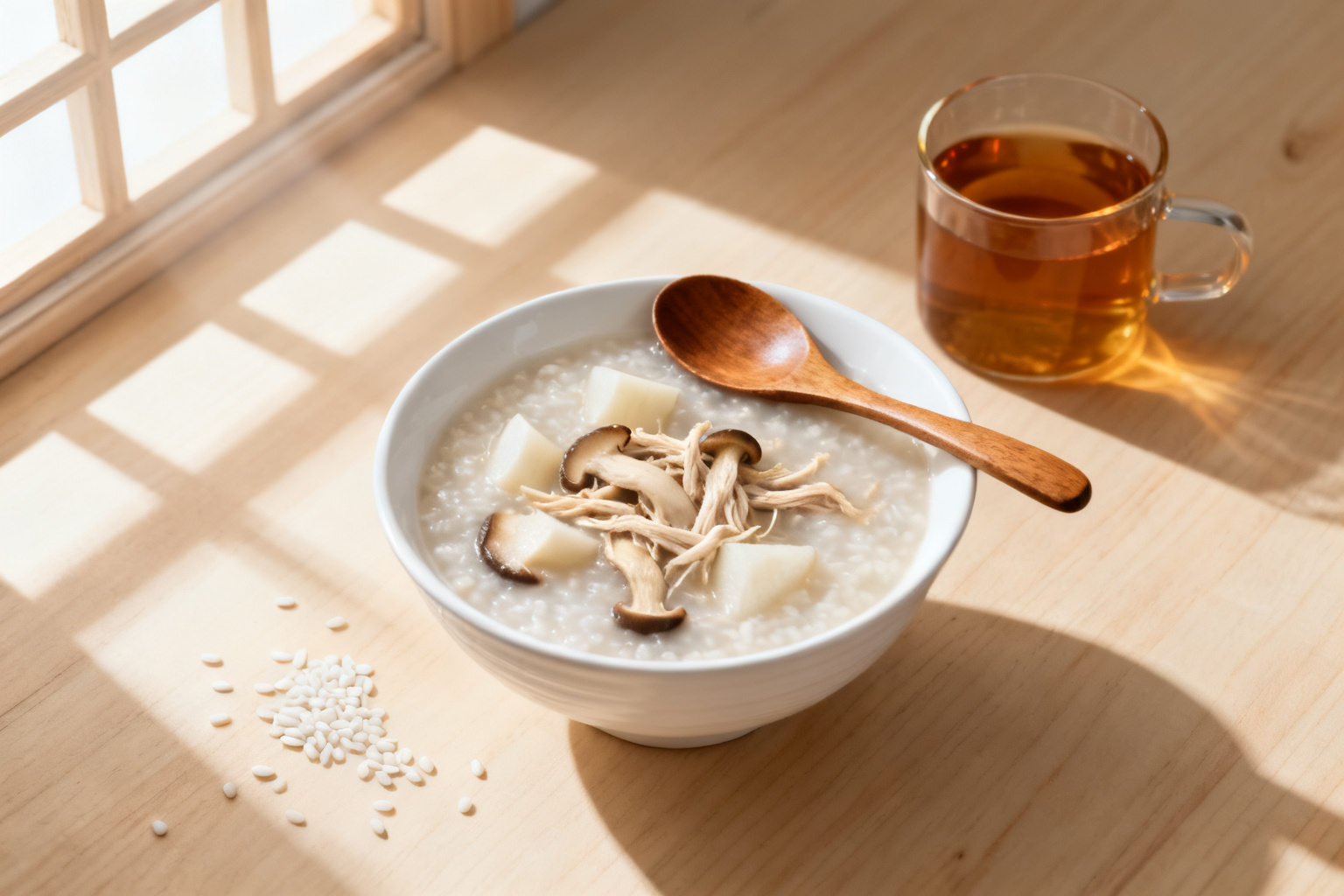
Two minutes is enough for a hot breakfast if you stop expecting it to behave like a cup of instant noodles. A bowl that has already been cooked, cooled and sealed does not need to be made in the morning. It needs to be brought back to the temperature and texture it had when it was finished, and that is a smaller, more honest promise than the word instant usually carries.
It is 7:12 on a Tuesday. The kettle is on, the bag is by the door, and the real choice is between a warm bowl and a second coffee on an empty stomach. Nobody in that moment wants a project. They want something they can hold, a spoon, and four minutes before the first message of the day arrives. That is the exact moment this porridge was built around, and it explains why the instructions are three lines long.
What follows is how the three bowls differ, when each one earns its place in a week, what two minutes can and cannot fix, and the small habits that make a warm bowl taste like a cooked one. There is also a plain look at what goes into the pot, because porridge is one of the few foods where the ingredient list is legible on the tongue. None of it takes long to read, and none of it requires a special pan.
In This Article
Two Minutes, and What Those Two Minutes Actually Buy
The saving is not the cooking. Rice porridge from raw grain is mostly waiting, and waiting was never the hard part. The hard part is the pot, the stirring at the right moment, the attention spread thin across an hour and a half, and the washing up afterwards. What a sealed bowl gives back is not the hour. It gives back the decision, the cleanup, and the small argument with yourself about whether it is worth starting at all.
Two minutes is enough because nothing is being made in your kitchen. Something is being returned to the state it was in when it was finished, which means even heat and a little patience matter more than speed. A bowl warmed hard at the edges and left cold in the middle tastes like exactly what it is. A bowl warmed evenly tastes like the pot it came out of, and that difference costs thirty extra seconds rather than thirty extra minutes.
It is worth being clear about what ready-to-eat porridge does not do. It does not turn a rushed morning into a slow one, and it will not make anyone enjoy getting up in the dark. What it does is smaller and more useful. It closes the gap between the intention to eat something warm and the act of eating it, so the intention has a chance of surviving contact with a real Tuesday.
The test I use is simple. After eating, are you a person who has had breakfast, or a person who is still waiting for lunch? A bar and a coffee can get you to eleven o’clock, but they rarely leave you feeling fed. Warm, thick, faintly savoury food does something a cold snack cannot, and it has less to do with the numbers on the label than with the fact that your mouth and your stomach both register it as a meal.
Texture is the thing worth discussing before anything else, because it is where first reactions split. People who grew up with congee finish the bowl without comment and call it correct. People who did not often ask what the texture is supposed to be, which is a fair question. The answer is that it should be soft enough to swallow without much work and thick enough to hold a spoon upright, and both of those are deliberate rather than accidental.
The Mornings This Was Built For
Four mornings come up again and again in the messages we get. The school run, where the only breakfast that gets eaten is one you can hold in one hand. The early train, where the choice is a bowl at home or a pastry at the station. The desk at nine, where eating happens between two meetings. And the morning after a late night, when nothing salty or heavy appeals and plain and warm is the only thing that sounds possible.
The desk morning is the one people underestimate. A bowl ready in two minutes is no use if it goes cold while you answer a question, so the useful habit is to warm it, eat half, then warm the rest for twenty seconds instead of letting the whole thing sit. It sounds fussy. In practice it is the difference between a warm breakfast and a bowl abandoned at the third spoon.
The eleven o’clock morning is its own case. Some people are not hungry at seven and are ravenous at half past ten, and forcing a full breakfast at seven makes both meals worse. A bowl kept in a desk drawer handles that better than anything that needs a fridge, and eating at ten thirty is not a failure of routine. It is a routine, just a later one.
Households with children run on a different clock again. The adult eats standing up, the child eats something that can be carried to the table, and both of those are solved by a bowl that does not need a pan. It is not glamorous. It is the reason a shelf in the cupboard matters more than a shelf in the fridge, and why the mild bowls disappear first.
For those mornings the mildest of the three is usually the right start. Soy Coconut Bird Nest Congee leads with soybean rather than sugar, so the first impression is savoury and soft, with coconut underneath doing the work cream would do in a Western porridge. It is the bowl I suggest to anyone who says they cannot face something sweet before ten in the morning.
Two things improve it and neither takes time. Warm it gently rather than fast, and stir once halfway, because the centre is always the last part to come up. Then put something cold and sharp on top: a few slices of pear, a spoon of plain yogurt, or nothing at all if you want the soy to read clearly. The bowl is soft by design, so a little contrast on top keeps it from tasting like a single note.
The Part of Porridge That Is Easy to Get Wrong
Three things decide whether a warm bowl tastes good, and none of them appear on a label. Temperature, body, and whether the second spoon is as interesting as the first. Everything else, including how the packaging looks on a shelf, is decoration. Get those three right and a bowl made in two minutes eats like a bowl made in ninety, which is the only claim worth making here.
Temperature is the most forgiving and the most frequently missed. Porridge that is merely warm tastes flat, because aroma needs heat to lift out of the bowl. The common mistake is heating until the first bite is comfortable and then eating the rest as it slides into something gluey. Heat a little past comfortable, stir, and let it settle for half a minute. The last spoon is then still warm, which is when texture is easiest to notice.
Body is the second. Porridge should be thick enough to hold a spoon upright before you stir it and loose enough to run off that spoon after. If it pours like soup, it was too thin to begin with or has been watered down by steam from a loose lid. If it stands like paste, a spoon of hot water and a stir fixes the whole bowl in ten seconds.
One physical detail nobody prints on a packet. A cold ceramic bowl pulls heat out of porridge within about ninety seconds of contact. If your bowl has been in a cupboard overnight, fill it with hot water for a moment, tip it out, then empty the packet in. It is the cheapest improvement available and almost nobody bothers, even though the first spoon tells you immediately whether it was done.
Layers are the third and the hardest to describe. A bowl that only tastes sweet becomes tiring by the fourth spoon, while a bowl with something toasted or savoury in it stays interesting to the end. If the soy bowl reads as too quiet first thing, the almond one wakes the same soft base with toasted nuts. Almond Goji Berry Congee keeps the glutinous rice body and lays a roasted, faintly bitter edge over it, with goji adding a bright note at the back.
The goji deserves its own sentence. Dried berries soften and turn slightly sour when they sit in heat, and that sourness is what keeps the bowl from reading as dessert. Eaten cold, straight from the fridge, the same berries stay firmer and the whole bowl tastes sweeter than it does warm. That is a useful switch rather than a compromise: same bowl, different occasion, and both versions make sense depending on the hour.
Tradition Sets the Standard, Not the Label
The word traditional on a package usually means a recipe existed once, somewhere, for somebody. In this kitchen it means a set of steps a bowl has to survive before it is allowed out. Soaking the rice long enough that the grain splits when it cooks. Cooking in two stages so the liquid thickens around the grain instead of being swallowed by it. Letting the pot rest off the heat so the surface sets.
Those steps cost hours, and they are the first ones cut when someone is optimising for cost. Cut the soak and the grain stays hard in the middle. Cut the rest and the bowl arrives watery at the top and thick at the bottom. We keep them because the difference survives the seal, and because soft is not the same thing as collapsed.
The ingredient list is short enough to read in one breath, and every item on it has one job. None of them is there for decoration, and a few behave badly if they are handled carelessly. Here is what each one is doing in the pot, and where the risk sits when a kitchen gets rushed. It is not a long list. It is a list where the order matters as much as the contents.
| What Goes In | What It Brings to the Bowl | Where the Risk Sits |
|---|---|---|
| Soybean | A soft, faintly sweet body that carries the whole bowl | Under-soaked beans taste raw and chalky, so the soak decides everything |
| Coconut milk | Fat and aroma, the reason the bowl feels round rather than thin | Boiled hard it splits and turns grainy, so it goes in late and gently |
| Glutinous rice | The stickiness that lets a spoon stand up in the bowl | Left standing too long after cooking it sets into paste |
| Quinoa, oats and barley | Chew, grain texture, and heat that reaches the bottom of the bowl | Barley holds firm longest, so the three cannot go in at the same moment |
| Almonds | A roasted top note that keeps the fourth spoon interesting | Stale nuts are the most common off note and the easiest to miss |
| Goji berries | A bright, slightly sour edge at the back of the throat | They soften fast in heat, so they go in near the end |
The pattern in that table is that nothing in the bowl is strong enough to carry it alone. Soy on its own is flat. Coconut on its own is sweet and thin. Rice on its own is glue. A bowl works when each ingredient covers the weak point of another, and the cook’s job is to keep that balance rather than make any single element louder.
The same logic governs what does not go in. Nothing is added to earn a line on the front of a box, because every addition costs texture somewhere else. If a component cannot be tasted in the finished bowl, it does not belong in the recipe. That rule has killed more ideas than it has saved, and it is the reason there are three bowls in this range rather than twelve.
One question arrives more often than any other, so it belongs here. Can the bowls be frozen? They can, and the texture shifts in a way some people prefer: the rice firms up slightly and the coconut separates just enough to taste like a skin on top. What we cannot tell you is how long a bowl survives in a hot car in July. Treat it like any other sealed food and do not find out.
The Hours Nobody Plans For
Night shifts, delayed flights, a deadline that quietly moves from nine to eleven, the hour after a long drive when cooking is not going to happen. None of these are meal times in the way a cookbook means it. They are the hours when people once ate whatever was left on the stove, and the modern version of that is usually a bag of something cold and salty eaten standing up.
What those hours ask for is different from a morning. At one in the morning nobody wants bright or sharp. You want heat that lasts to the bottom of the bowl, a texture with some resistance so that eating takes long enough to feel like a pause, and nothing so sweet that it sits badly afterwards. This is the one situation where thick beats delicate.
So if the almond bowl is a morning bowl, this one belongs to the other end of the clock. Thick Coconut Bird Nest Congee is built on quinoa, oats and barley rather than rice alone, which gives it a heavier body and a chew that survives reheating. Coconut keeps it soft on the palate, but the grains are the reason a bowl of it at midnight feels like a meal and not a drink.
Two habits make it work at that hour. Warm it longer than feels necessary, because a thick grain bowl holds heat in the centre and can read warm at the edge while still being cool two spoons in. Then sit down for it. Eating at a counter at one in the morning is how a meal turns into a snack, and the difference between the two is mostly about whether you stopped moving.
There is also the next morning to consider. A midnight bowl that sits heavily makes for a bad start at seven, which is why the barley matters. It fills without feeling dense, and the salt stays low enough that you do not wake up thirsty. Small things, but at that hour small things are the entire experience.
It travels well, which is why it ends up in suitcases. A sealed bowl needs no fridge, does not leak in a bag, and can be warmed in a hotel sink with the kettle provided. People who work away from home tell us this is the main reason they keep one in the case, and it is a better argument than anything I could invent about convenience.
What Good Taste Means in a Bowl of Porridge
Good porridge arrives in three parts, and anyone can learn to check all three in a single spoonful. The entry, the middle, and the finish. Most quick bowls get the entry roughly right and then give up somewhere around the second spoon, which is why the first taste is a poor guide and the fourth is a good one. Judge a bowl there.
The entry is the first two seconds: heat, aroma, and how the surface feels against the lip of the spoon. A bowl that smells of nothing has usually been heated unevenly or eaten too cool. A good entry is faintly sweet, faintly nutty, and mostly just warm, which sounds like almost nothing until you compare it with a bowl that has none of it.
The middle is body. How the grain gives under the spoon, whether the liquid coats, whether any resistance is left in the rice. This is where fast porridge usually fails, and it is the one part that cannot be rescued by adding starch or water at the end. Either the grain was cooked properly before it was sealed or it was not, and a spoon finds out immediately.
The finish is what stays after you swallow: a toasted note from the nuts, a sour edge from the goji, the coolness of coconut at the back. The finish is also the most personal part of the experience. A good one makes you set the spoon down for a second, which is an odd thing to notice and a reliable signal that the bowl was worth the two minutes.
In a normal week most people eat two or three of these rather than seven, and that is the right shape for it. The bowl replaces the meal nobody was going to cook, not the Sunday breakfast somebody was looking forward to. Keep two in the cupboard, one mild and one thick, and the decision on a bad morning costs nothing at all.
One Thing to Remember
The two minutes are not the achievement. What matters is whether the bowl holds heat long enough to taste like something cooked, so judge a quick porridge by its texture at the third spoon, not by how fast the lid came off.
Frequently Asked Questions
Is a two-minute bowl worth the money compared with making rice porridge from scratch?
Yes, if you count what the hour costs you. Raw rice is cheap and the pot, the stirring and the washing up are not free. A bowl costs more per serving than grain and far less than the breakfast you buy on the way to work. The fair comparison is the meal you would otherwise skip or buy, not the sack of rice at home.
What is the best way to warm it so the texture comes back?
Stand the sealed bowl in hot water for the full two minutes, stir once at the halfway point, then let it sit for thirty seconds before eating. Microwaving works too, but use short bursts and stir between them, because the centre heats last. If the porridge looks thick, add a spoon of hot water and stir rather than adding more heat.
Can this work as a late-night meal rather than breakfast?
It works better at night than most breakfast foods do. The thick grain bowl in particular holds heat long enough to eat slowly, which is what a late night asks for. Warm it longer than you would in the morning and sit down with it. Few people regret a warm bowl at midnight and plenty regret the bag of crisps.
How does it compare with instant oatmeal or a breakfast bar?
Instant oatmeal is faster and thinner, and a breakfast bar is not warm at all. The difference is body: this is a cooked rice or grain porridge with a savoury base, so it eats like a dish rather than a sweetened drink. If you want something finished in four bites while walking, a bar still wins that contest.
Do the bowls need refrigeration, and can I take one travelling?
They are sealed and shelf stable until opened, so one travels in a suitcase without a cool bag. Customs rules differ by country, so check before packing a dozen. Once opened, eat it in one sitting, because there is no sensible way to save half a bowl. An unopened one in a desk drawer will outlast the week.