

Blog
Ready-to-Eat Lobster Bisque: A Premium Seafood Soup Opportunity for Global Food Brands

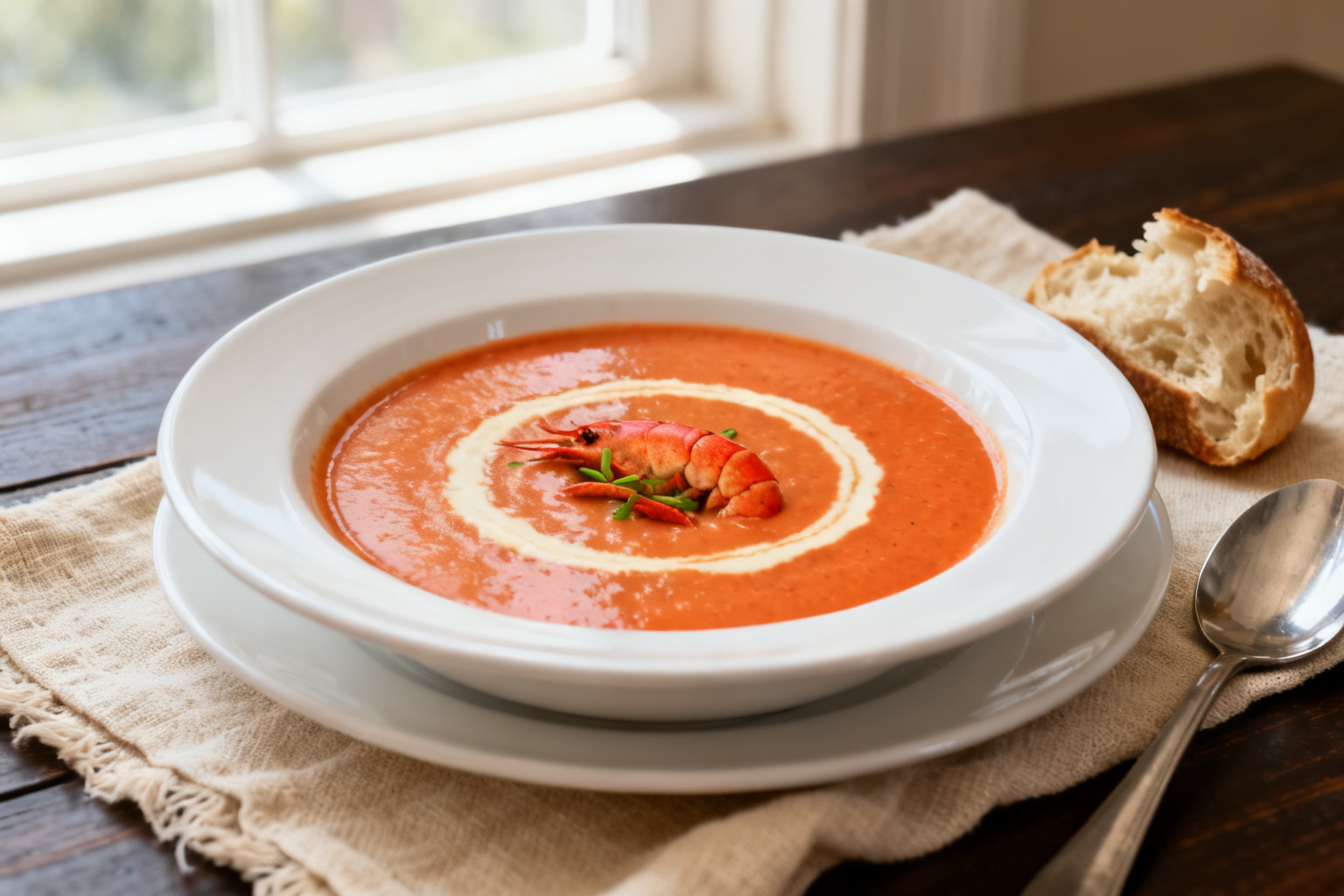
A ready-to-eat lobster bisque is judged in about ten seconds, and almost none of that judgement is about lobster. Heat comes first, then body, then whether the shellfish is actually there underneath the cream. Everything that makes the bowl worth buying was decided long before anyone warmed it, in a pot, with shells, and a cook standing over it tasting from a spoon.
That is the part worth understanding if you like this soup. A bisque is not a cream soup with seafood stirred into it. It is a shellfish stock reduced until it carries weight on its own, thickened lightly, finished with a little brandy, and seasoned at the very end. The cream is the vehicle. The shell is the point, and the difference shows up in the middle of the spoon rather than the first sip.
What follows is what the bowl should taste like, how each classic ingredient behaves, the order in which people notice things without being told to, the hours when a bisque earns its place in an ordinary week, and how it compares with the restaurant version, the tin, and the afternoon you might spend making your own. Taste, texture, and heat are the only claims made here.
In This Article
What a Lobster Bisque Should Taste Like Before Anything Else
The first spoon should taste of shellfish before it tastes of cream. That sounds obvious and it is rarer than it should be. Lobster meat is sweet and faintly briny, and the shells hold even more of that sweetness than the meat does, which is why the stock matters more than the size of the pieces you can see. When the cream arrives first, you are eating a cream soup with a lobster’s name printed on it. The correction is never more lobster. It is a stronger base underneath.
The middle of the spoon is where body lives. A shell stock reduced far enough gives the soup a weight that no thickener can imitate, a savoury depth that sits under the sweetness instead of beside it. Tomato paste adds a quiet acidity that keeps all that cream from turning flat, and the aromatics work in the background without announcing themselves. You should not be able to pick out the carrot or the celery. You should only notice that something is holding the whole bowl up, the way a floor holds up a room you are standing in without being asked to.
Then there is the finish. A splash of brandy or dry sherry goes in late, so the alcohol lifts the aroma without turning sharp. Black pepper, a whisper of cayenne, and one herb, usually thyme or tarragon, arrive at the end and leave quickly. What stays is a warm, clean shellfish taste that has you reaching for the next spoon before you have decided to. The finish is also the part that fades first when a soup is made ahead, which is why it deserves attention rather than a careless pinch at the pass.
Bisque tastes different at different temperatures, and that is worth knowing before you judge one. We taste a pot warm from the stove and again as it drops toward serving heat, because cream reads heavier when the soup is very hot while the shellfish reads stronger a few degrees cooler. Salt moves the same way. Under-salted bisque tastes of cream and nothing else, and over-salted bisque buries the sweetness that made the exercise worthwhile. The right level is the point where the lobster suddenly steps forward, and that point shifts as the bowl cools.
What Actually Goes Into the Bowl
A bisque starts with shells, not with meat. Heads, bodies, and legs are roasted until the edges brown, then simmered with water and a few aromatics until the liquid tastes strong enough to be worth reducing. This is the step that cannot be hurried and cannot be faked. The meat is handled separately and added near the end, because lobster that simmers for an hour turns firm and loses the sweetness people came for. Anyone who has made stock at home knows the smell that fills a kitchen at this stage, and how much of the final bowl is decided right there.
Tomato paste does more work here than most people expect. It gives the soup its colour, a slight acidity that cuts the cream, and a savoury base that makes the shellfish taste rounder than it would alone. It should never be identifiable on the spoon. The same goes for the onion, carrot, and celery, which are cooked down until soft and then strained out, leaving only the sweetness they gave up. A bisque that tastes of vegetables has usually been under-reduced rather than over-vegetabled.
| Ingredient | What It Does in the Bowl | What to Watch For |
|---|---|---|
| Lobster shells and heads | Build the stock that carries the whole soup | Needs roasting and a long simmer, or it reads thin |
| Tomato paste | Adds colour, acidity, and savoury depth | Too much and the soup turns sharp and red |
| Onion, carrot, celery | Give background sweetness | Should be strained out, never left chunky |
| Butter and flour | Give the soup its body and a soft coat on the spoon | Raw flour taste survives if it is not cooked out |
| Cream | Rounds the edges and carries the aroma | Boiling hard after it goes in risks splitting |
| Brandy or dry sherry | Lifts the shellfish note at the finish | Added off the heat, or the aroma burns away |
Roux is what gives a bisque its structure, and it is where many bowls go wrong. Flour cooked in butter has to lose its raw taste before any liquid goes in, otherwise the finished soup tastes of paste no matter how good the stock was. Then the stock goes in gradually, then the cream, and the whole thing simmers just long enough to come together. Cream added too early and pushed too hard will split, and no amount of stirring brings it back. This is the least glamorous part of the process and the one that decides the texture.
The last additions are the ones you taste first. Brandy or sherry goes in off the heat so the aroma survives. The soup is passed through a fine sieve, which is the difference between a smooth bowl and one with a texture that catches at the back of the throat. Then salt, pepper, and a touch of cayenne are adjusted with the pot still warm, and the bisque rests a few minutes before it is cooled. Nothing in that sequence is difficult. All of it has to happen in the right order.
How much visible lobster belongs in the bowl is a fair argument to have. Too little and the soup feels like a stock with ambitions. Too much and it turns into a stew, and the delicate thing built in the pot disappears under chunks. The version we like keeps the meat in pieces small enough to sit on a spoon alongside the liquid, so every bite carries both. That is a texture decision as much as a quantity one, and it changes how long the bowl takes to finish.
The Part Worth Protecting
Everything worth protecting in this soup is texture and heat. The flavour is decided in the pot, but whether anyone actually tastes it is decided later, by how the bisque is stored, how gently it is warmed, and how long it waits before a spoon goes in. A spoon-coating body is the standard to aim for. Thick enough to cling to the back of a spoon, thin enough to pour from a ladle without help, and stable enough that it does not turn to glue as it cools on the way to the table.
Serve it hot, but not boiling. A bisque pushed to a rolling boil loses the volatile aromatics that carry the brandy and the shellfish, and the cream starts to taste cooked rather than fresh. Gentle heat with the occasional stir, until steam rises and the first small bubble appears at the edge of the pan, is enough. In a bowl, that also means warming the bowl first, so the soup does not drop ten degrees before it reaches the person eating it. Small habit, noticeable difference.
Anyone who tells you there is one correct thickness for a bisque is selling a preference as a rule. Coastal kitchens in different places disagree about it, family recipes disagree more, and both are working from a legitimate idea of what the soup should be. What is not negotiable is balance. If a bisque is thick enough to stand a spoon upright in, it needs enough stock and enough acidity to keep from tasting like sauce. We lean toward the looser end, and we would rather be argued with than be heavy.
Bisque thickens as it cools, which surprises people who reheat a bowl the next day and find something closer to a sauce than a soup. Loosen it with a spoonful of stock, milk, or water before it goes back on the heat, and give it time to come together rather than adding liquid at the last second. Reheated gently, it comes back close to what it was. Reheated hard and fast, it never quite does, and the difference is entirely in the temperature of the pan rather than the quality of the soup.
What People Notice First, and in What Order
Ask people what they noticed about a bisque and almost nobody starts with flavour. They start with heat. A bowl that arrives lukewarm reads as careless before a single herb has been identified, and a bowl that is properly hot buys patience for everything that follows. This is why serving temperature matters more than the last pinch of salt. It is the first decision and the easiest one to get wrong, and it is fixed in about ninety seconds at the stove.
The second thing people notice is texture, and they notice it without vocabulary. Smoothness on the tongue, the weight on the spoon, whether the soup feels thin at the front and thick at the back. A bisque thickened with starch rather than built on stock has a particular flat slickness that people register as wrong even when they cannot say why. Texture is also the part a cook cannot apologise for later. Once the bowl is on the table, the structure is either there or it is not.
The third thing people notice is that the bowl is empty. Good bisque goes faster than people expect, because it is rich enough to feel like a treat and smooth enough to keep going down. That makes portion size a real question rather than an afterthought. A small bowl leaves people wanting more, which is fine as a first course and frustrating as a dinner. Somewhere around a cup and a half is where most people land comfortably, with bread doing the rest of the work.
The question we hear most about bisque is not about lobster at all. It is about heat: how hot, for how long, and whether a microwave is acceptable. The honest answer is that gentle and slow beats fast and fierce every time, and that a microwave works perfectly well if you use a lower setting and stir once in the middle. What fails is high heat in short bursts, which heats the rim hard, leaves the centre cool, and gives you a bowl that tastes of two different soups.
The Hours When a Bowl of Bisque Makes Sense
Nine or ten at night is the hour this soup was built for. The day is finished, nobody wants to cook, and the choice usually comes down to something cold from the fridge or something ordered in that arrives late and costs more than it should. A bisque warms in minutes, needs nothing beside it except bread, and leaves one bowl and one spoon to deal with afterwards. That last part matters more than people admit when they are deciding what to eat at ten at night.
Weekend lunch is the other natural slot. A bisque makes a table feel looked after without a kitchen full of pans, and it works as a first course for people who are about to be served something simple. Warm the bowls, put out bread and butter, and let it open the meal rather than carry the whole of it. Guests notice the temperature and the smell before they notice anything else, which is one reason a soup course is such an easy way to make an ordinary lunch feel deliberate.
Eating alone is where a bowl like this earns its keep. It is easy to treat a solo dinner as an inconvenience and end up with cereal at the counter, and there is no rule that says a proper hot bowl has to wait for company. It sits in the cupboard alongside the rest of our instant soups, which is the point. A good one should be as easy to reach for on a Tuesday as a packet of noodles, and considerably better to sit down to.
None of these are special occasions, and that is deliberate. A soup like this belongs in a normal week, two or three times a month, next to the pasta and the rice and the things you actually cook. The mistake is saving it for a dinner party and then forgetting it exists for the rest of the year. It is ready to eat, and the value of that only shows up on the days when nobody in the house has time to stand at a stove.
How It Stacks Up Against the Other Options
Against a restaurant version, the difference is waiting rather than quality. A good seafood kitchen will make a bisque that beats most things you can warm at home, and it should, because someone is doing the shells, the stock, and the washing up while you sit down. What a bowl at home gives you is the same flavour at ten at night without a reservation, a drive, or a bill that includes the table next to you and the parking.
Against the condensed tins in the soup aisle, the difference is what has been left out and what has been put in. Condensed soup is built to be diluted, so the salt level is set high and the lobster note often comes from a base rather than from shellfish. A bisque built on reduced shell stock starts from a different place, and it shows in the middle of the spoon, where depth sits rather than salt. That is the part you cannot correct at home with a splash of milk.
Against making it yourself, there is no contest on effort and no contest on reward, and both of those things are true at once. If you have an afternoon, a fishmonger, and a pot big enough for shells, making bisque from scratch is one of the better ways to spend a Saturday, and the smell alone justifies it. What most of us do not have is the afternoon. That gap, between two hours and ten minutes, is the only gap this soup is trying to close.
What to look for when you choose one comes down to three things. Shellfish first on the nose, a body that coats without clinging, and a salt level that makes the lobster louder rather than the soup saltier. If cream arrives before shellfish, the base was too weak. If the finish makes you take another spoon before you have thought about it, the proportions were right. That reaction, more than any description on a label, is the useful test.
One Thing to Remember
A bisque is built backwards from the shell, not forward from the cream. Reduce the stock until it carries weight by itself, cook the flour out properly, and season at the very end, and the bowl will still taste of lobster long after it has left the pot it was made in.
Frequently Asked Questions
Why does a good lobster bisque cost more than other soups?
Shellfish is the reason, and it is not the meat alone. Heads, bodies, and legs have to be bought, roasted, and simmered into a stock that reduces to a fraction of its original volume, and all of that happens before anything else enters the pot. Cream, butter, and brandy add cost on top. What you are paying for is concentration, not decoration.
What is the best way to warm it without spoiling the texture?
Gentle heat with occasional stirring is the safest method. Pour it into a saucepan and warm it over a low flame until steam rises and small bubbles appear at the edge, then take it off. If you use a microwave, choose a lower setting and stir once halfway through. Boiled cream loses the shellfish aroma.
Can a bowl of bisque count as dinner on its own?
Yes, with one addition. A bowl at roughly a cup and a half satisfies most adults, and bread with butter turns it into a proper meal. If you have eaten lightly all day, add a simple salad or a few cold prawns on top. It works best as the centre of a small meal rather than as a side.
How does it compare with the bisque served in a restaurant?
The flavour can come close, and the experience differs in one obvious way: there is no waiting and no bill at the end. A good seafood kitchen will usually win on the last few percent, because someone is finishing the soup to order. At home you get consistency and a bowl in ten minutes.
How long does it keep once it is in the cupboard?
Follow the date on the bowl rather than guessing. Kept cool and dry, an unopened ready-to-eat soup holds its quality until that date, and the flavour is at its best in the first half of the window. Once warmed, refrigerate what you do not finish and reheat it gently the next day with a splash of stock or milk.