

Blog
Kudzu Root Tea: A Quiet Cup for the Office Afternoon

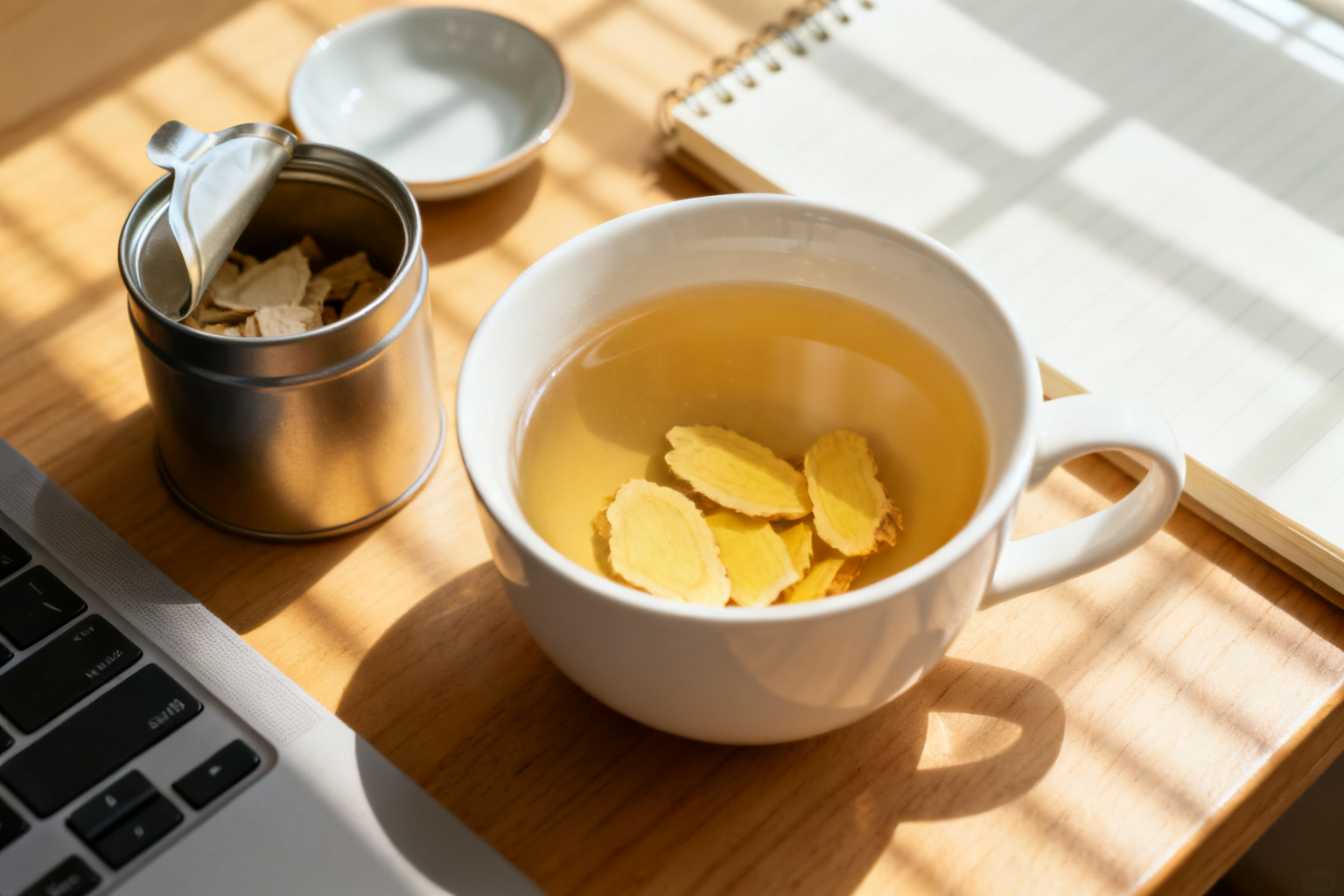
Three in the afternoon is the flattest hour of the office day. Lunch has settled, the next meeting is still twenty minutes out, and the coffee machine has already done what it can. What helps at that hour is rarely a stronger coffee. It is usually something warm and mild, a cup that can be sipped slowly while the work keeps moving.
Kudzu root tea is one of those cups. It is made from slices of dried kudzu root, sometimes with peach kernel added, steeped in hot water until the liquid turns pale gold. In southern China it is a household item rather than a specialty: sold by weight at dried goods stalls, kept in a tin in the kitchen, brewed when someone wants something warm that is neither sweet nor strong.
This piece is about where that cup fits into a working day: what it does and does not taste like, which other Chinese herbal tea it sits beside, how to steep it so the flavour holds, and what to do with it after a rich dinner. Mostly it is about the ordinary case, a mug on a desk and a tin in a drawer.
In This Article
What Is Actually in the Cup
The ingredient is the root of the kudzu vine, dug in winter, sliced and dried until the pieces are hard, chalky and pale. Nothing is added to make it taste like something else. Steeped, the slices give a liquor that is thin and faintly sweet, with a starchy weight at the back of the tongue and very little aroma. Kudzu root does not fill a room the way jasmine does.
Chinese herbal tea is often discussed as if it were one thing. It is not. It is a shelf of separate ingredients, each steeped on its own: lotus leaf tea in summer, hawthorn tea after a heavy meal, mulberry leaf tea when the weather turns. Families keep four or five tins in the cupboard. In Guangzhou a summer herbal tea is often coix seed and lotus leaf left to cool on the counter, with the kudzu tin standing beside it.
The kudzu version belongs to the milder end of that shelf. It is not sour, not smoky and not medicinal. People who grew up with it describe it as sweet water with a little body, which is close to accurate. If you expect a strong flavour the first cup can seem like almost nothing. The second cup is where most people notice the finish.
The Hour It Was Built For
Herbal tea for office afternoons is a small genre with specific requirements. It has to survive being forgotten for ten minutes. It has to taste acceptable when it has gone lukewarm. It should not leave a film on the mug. And it should not make the hour after it feel worse than the hour before, which is the usual risk with anything stronger.
The practical version looks like this: a small pinch of pieces in a wide mug, hot water from the office kettle, a first taste after two minutes, and a top-up when the mug is half empty. The second pour is often better than the first, because the slices have had time to open. Nobody needs to leave their desk for any of it.
There is a reason the hour matters. The afternoon slump is usually answered with more stimulant, and more stimulant is not always what was asked for. Sometimes the ask is simply warmth, a pause and something to hold while a long document gets read again. A mild cup that is easy to finish delivers that much without rearranging the rest of the day.
Where It Sits Among the Other Cups
Put it beside the rest of the herbal tea shelf and the differences are easy to taste. Ginseng tea is deep and bitter-sweet, with a rooty intensity that some people love and others find heavy. It is a cold-morning cup, and a small one goes a long way. Coix seed tea is grainy and faintly milky, closer in texture to a very thin porridge than to a brew.
The leaf teas are different again. Lotus leaf is green and grassy and goes flat quickly once it cools. Mulberry leaf is lighter still, dry and leafy, closer in feel to a green tea than to a root. Both are warm-weather cups, the kind people drink iced in July and forget about by October.
Hawthorn is the loud one: sour, bright, almost sharp. Kudzu root sits between these extremes. It has more body than the leaf teas and less edge than ginseng, and its sweetness is starchy rather than fruity. In a lineup it is the cup people finish without comment, then ask for again a week later.
Steeping It So the Cup Holds Up
How to steep herbal tea is mostly a question of space and time. Dried root needs room to open, so a basket infuser packed tight will give a thin cup no matter how long it sits. Use a mug wide enough for the pieces to move, water just off the boil rather than boiling hard, and give the first pour two minutes before tasting. If the liquor is still pale, wait another minute rather than adding more.
| Pour | Water | Time in the Mug | What the Cup Does |
|---|---|---|---|
| First pour | Just off the boil | Two minutes | Pale gold, thin, sweet at the front |
| Second pour | Just off the boil | Three to four minutes | More body, the root note moves to the back |
| Long steep | Hot, left standing | Ten minutes or more | Turns dry and slightly bitter, still drinkable |
| Last pour | Hot, same pieces | Five minutes | Faint and watery, mostly warmth |
Compared with the other roots on the same shelf, the differences are small but real. People sometimes ask about chinese yam tea taste in the same conversation, because the two are stored side by side. Yam is creamier and rounder, with a soft starchy sweetness that coats the mouth. Kudzu root is drier at the finish and leaves less behind. If yam is closer to a thin soup, kudzu is closer to water with a memory.
The Blend We Keep at the Desk
The version we make is Kudzu Root and Peach Kernel Herbal Tea. The kudzu is cut into small, even pieces rather than ground, so the liquor stays clear and the pieces can be re-steeped without turning muddy. Peach kernel goes in at a small proportion. It brings a faint nutty bitterness that sits behind the sweetness and keeps the cup from tasting flat.
What we try to protect is the middle of the cup, that stretch between the first sweet sip and the dry finish. Milling the root finer would release faster and fill a tin more quickly, and the middle would be gone. So the pieces stay whole, the kernel stays a minority, and the tin is built to be kept within reach rather than at the back of a cupboard.
After a Heavy Dinner, and the Last Hour
Tea after a rich dinner is usually a sour cup, and hawthorn owns that slot for good reason: the sharpness cuts through fat in a way a mild root tea cannot. But not everyone wants sharp at nine in the evening. Kudzu root is the quiet option, warm and slightly sweet, and it does not argue with the last course the way a bright sour tea does.
It is worth saying that no leaf of the tea plant goes into this cup, so the caffeine people worry about at night is not there. Whether it keeps anyone awake is a personal matter, and there is no rule that fits everybody. A reasonable habit is to drink it earlier in the day first, then move it later if that suits you.
One more thing, offered without certainty: the cup tastes better from a mug that was warmed first with hot water and emptied. We are not sure the warming matters as much as it seems to, and it costs nothing, so the habit has stayed.
One Thing to Remember
A root tea this mild is judged on the second cup, not the first. What makes it work at a desk is density: whole pieces that keep giving through an hour of top-ups, so the drink stays warm and drinkable long after a leaf tea would have gone flat.
Frequently Asked Questions
Is kudzu root tea worth keeping at a desk?
Yes, if what you want is a cup you can forget for ten minutes without ruining it. The pieces are dense, so they re-steep well and one small scoop can carry an afternoon of top-ups. It also stays pleasant at room temperature, which is more than most leaf teas manage. That is the case for a tin in the drawer rather than a box of bags.
How hot should the water be, and how long do the pieces stay in?
Water just off the boil is right, not a rolling boil, and two minutes for the first taste. Leave the pieces in the mug if you like a stronger cup, since the flavour keeps building for about ten minutes before it turns dry. After that, top up with hot water for a second and third pour.
Can it stand in for the morning coffee?
It can fill the same ten minutes, but it will not do the same job. There is no tea leaf in the blend, so nothing in the cup is doing the work caffeine does. People who try it as a coffee swap usually keep it for the afternoon instead, where a mild warm drink is closer to what the hour is asking for.
How does it compare with ginseng tea or hawthorn tea?
It is milder than both. Ginseng tea is deeper, more bitter and more intense, and a small cup goes a long way. Hawthorn tea is sour and bright and usually turns up after a heavy meal. Kudzu root sits in the middle: faintly sweet, low in aroma, easy to drink in quantity without noticing.
Is kudzu root tea actually tea?
Not in the strict sense. It is a herbal infusion made from dried root rather than from the leaves of the tea plant, which is why the liquor is pale rather than amber-brown. The word tea gets used loosely for any hot drink made by steeping something in water. By that definition it qualifies comfortably, and so do most of the drinks on the same shelf.
Try It Yourself
The bowls mentioned in this article, straight from our kitchen.
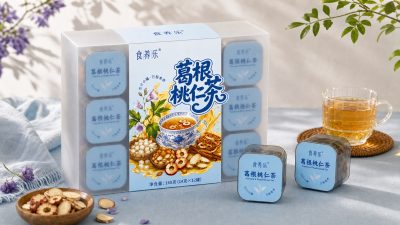
Kudzu Root and Peach Kernel Herbal Tea
View Product